Hiroshima Airport Peace Mural: Hiroshima and Mexico Call for a Nuclear-Free World
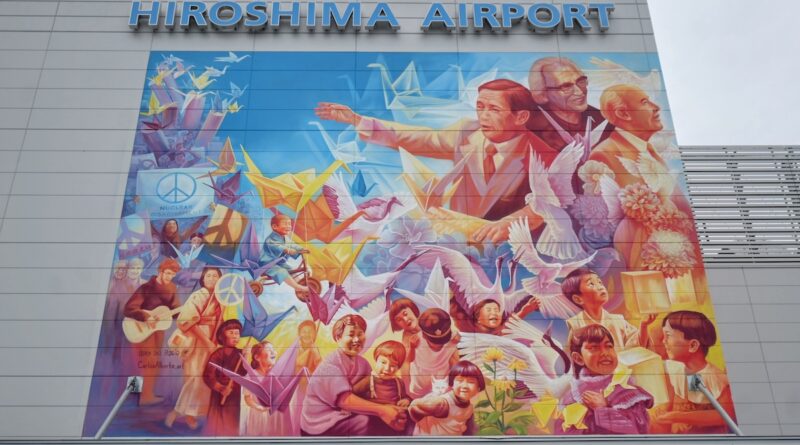
On October 15, 2025, Hiroshima Airport became home to an eye-catching new symbol of international friendship — the Hiroshima–Mexico Friendship Mural for a World Without Nuclear Weapons. The mural, created by celebrated Mexican artists Adri del Rocio and Carlos Alberto GH, stands as a vivid expression of peace, solidarity, and the common goal of eliminating nuclear weapons.
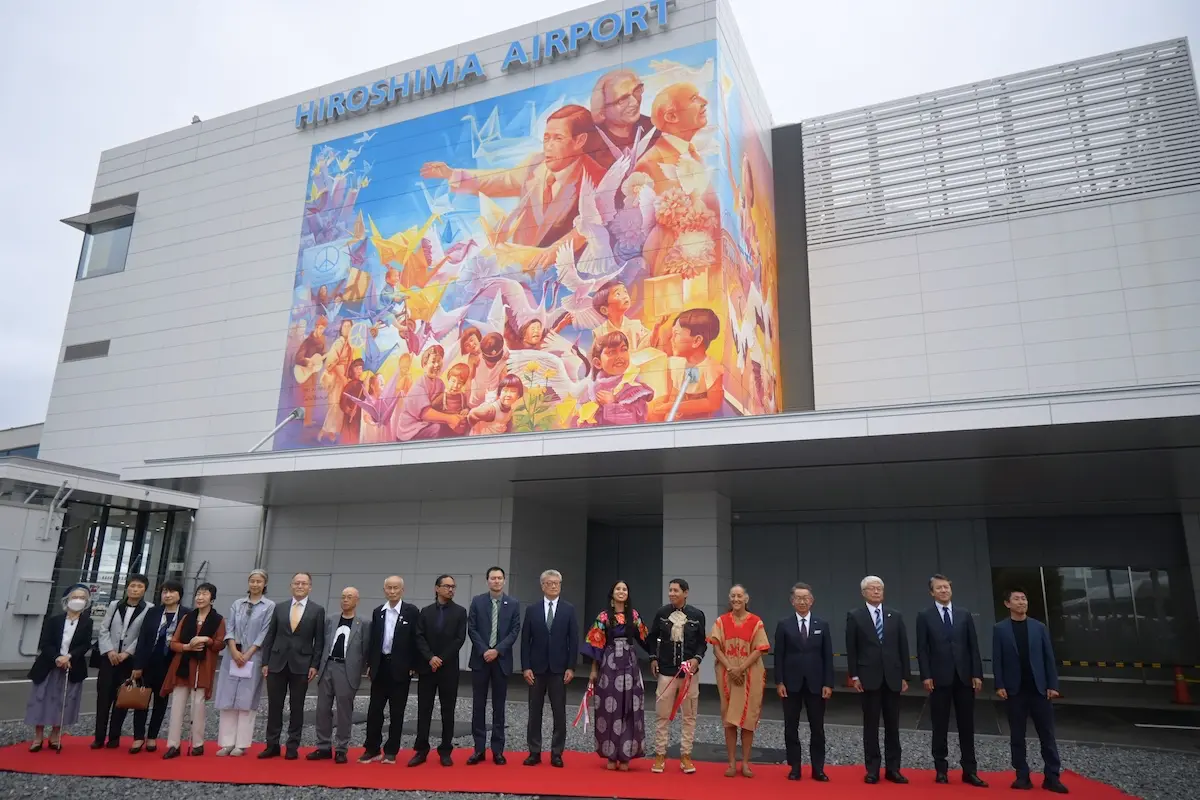
Unveiled before an audience of hibakusha A-bomb survivors, peace advocates, and local officials, the event marked a poignant moment in the continuing 80th anniversary year of the atomic bombing. The mural’s unveiling was not just an artistic celebration, but a heartfelt reassertion of Hiroshima’s message to the world: Never again!
A Vision Born of Two Cultures
The project was conceived by brothers Ichiro and Minoru Gutiérrez, who share Japanese and Mexican roots. Their cross-cultural background inspired them to bridge two countries united by their commitment to peace.
Ichiro, a former international coordinator with Peace Boat, has long worked to share Hiroshima’s hibakusha testimonies worldwide. His brother Minoru has spent years fostering Japan–Mexico exchange through cultural and educational initiatives. Together, they envisioned a mural that would transform the airport into a gateway of remembrance and hope — where travelers could encounter Hiroshima’s message as they touch down or before they leave the ground.
In this 80th anniversary year of the A-bomb attacks on Hiroshima and Nagasaki, for them, the mural is a way, “to express the the utmost respect to the atomic bomb survivors who have carried humanity’s memories and dedicated themselves to bearing witness” and to proclaim that, “the future is near when we inherit the will of those survivors who persevered in their activities, never forgetting the memories of those who perished.”
Art with a Global Message
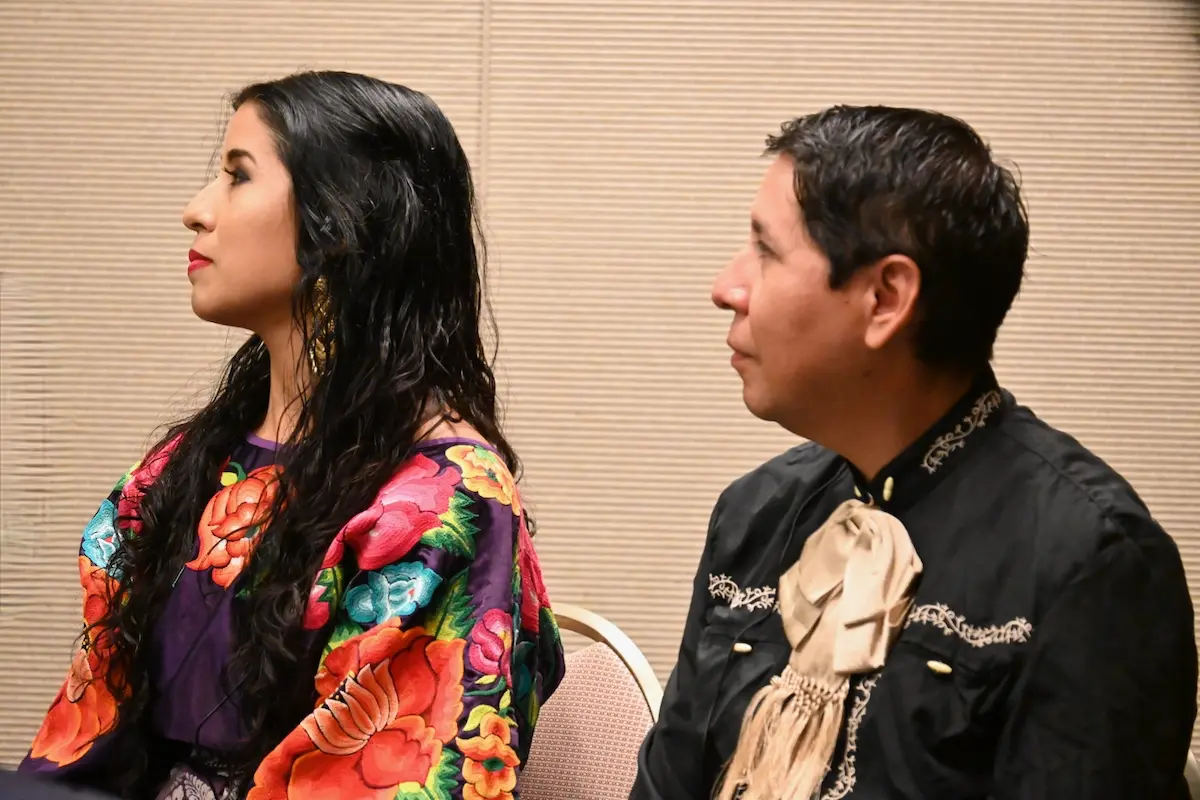
The chosen artists, Adri del Rocio and Carlos Alberto GH, are among Mexico’s most internationally recognized muralists, with public artworks in more than 25 countries. For the Hiroshima project, they immersed themselves in the city’s history, meeting hibakusha survivors from both and local peace activists.
Their design blends the bright colors and symbolism of Mexican muralism with imagery that reflects Hiroshima’s spirit — hands extended in unity, doves in flight, and a sunrise over the city’s iconic landmarks. The composition embodies the shared hope of both nations: a world where nuclear weapons no longer exist.
In his remarks to the people gathered at the opening of the mural, less than a month after painting had begun, Carlos Alberto GH, who was responsible for design and initial sketches, talked of how they were moved and inspired by the testimony of the survivors that they spoke as part of their preparation. Hiroshima atomic bomb survivor Toshiko Tanaka recalled how glimpses of blue sky through the cracks in the foot of a collapsed house giving them the will to live. Yasuaki Yamashita, a survivor who is now a Mexican citizen, described peace as a world in which flowers bloom under blue skies. It was these stories, Carlos Alberto says, that inspired the bright blue skies depicted in the mural.
See the artists at work on their depiction of Yasuaki Yamashita in this video on Instagram.
The inspiration for the Children’s Monument in Hiroshima Peace Memorial Park, Sadako Sasaki, now known around the world as the A-bomb survivor who folded origami peace cranes in hospital in the hope of recovering from leukemia at the age of 12, 10 years after she was exposed to the A-bomb, is also featured prominently.
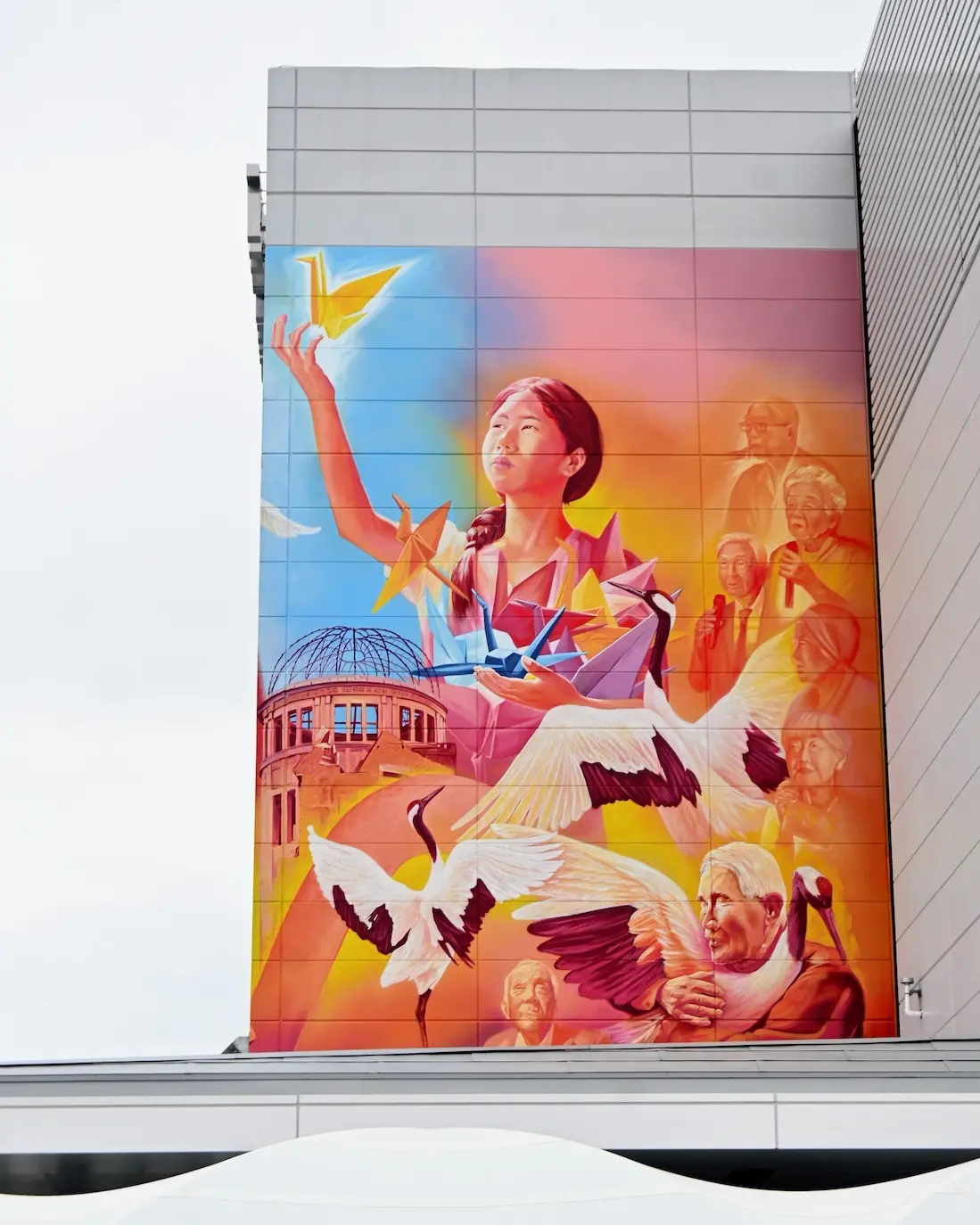
Carlos Alberto GH described how they envisioned nuclear weapons around the globe being transformed into the origami cranes being released into the air by Sadako – an expression, perhaps, of the impact that all of our efforts, inspired by the example of people like Sadako, might help rid the world of these unconscionable weapons might have. Mexico’s national flower, the dahlia, which symbolizes blooming even in “adversity,” is also featured.
Mexico’s Leadership in Disarmament
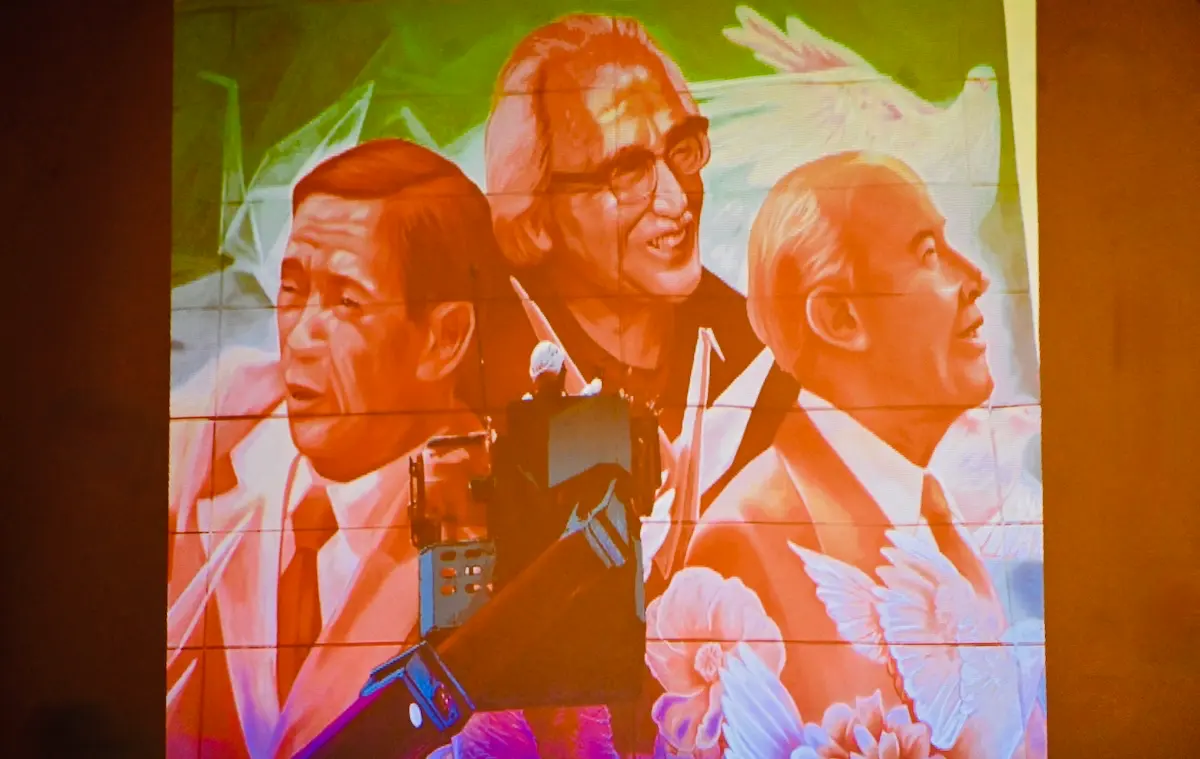
Mexico’s involvement carries deep significance. It was the first nation to enshrine a nuclear-free policy in law, leading to the Treaty of Tlatelolco — the world’s first legally binding agreement prohibiting nuclear weapons in an entire region. This pioneering diplomatic effort earned Mexican diplomat Alfonso García Robles the 1982 Nobel Peace Prize. Robles features predominantly, alongside founding members of the hibakusha organization Hidankyo, which received the 2024 Nobel Peace Prize, the late Ichiro Moritaki and Senji Yamaguchi, relatives of whom were in attendance, along with current Hidankyo representatives, Toshiyuki Mimaki and Kunihiko Sakuma.
A Living Message at Hiroshima’s Gateway
Now standing proudly at Hiroshima Airport, the mural welcomes travelers with a powerful message that transcends language and culture. Its unveiling coincides with increased concern at how the possibility of using nuclear weapons is once again part of international discourse, and calls not only for remembrance of the past, but also for action toward a peaceful future.
As visitors pause before this luminous work, they are invited to reflect on Hiroshima’s history, Mexico’s solidarity, and the shared hope of people around the world.
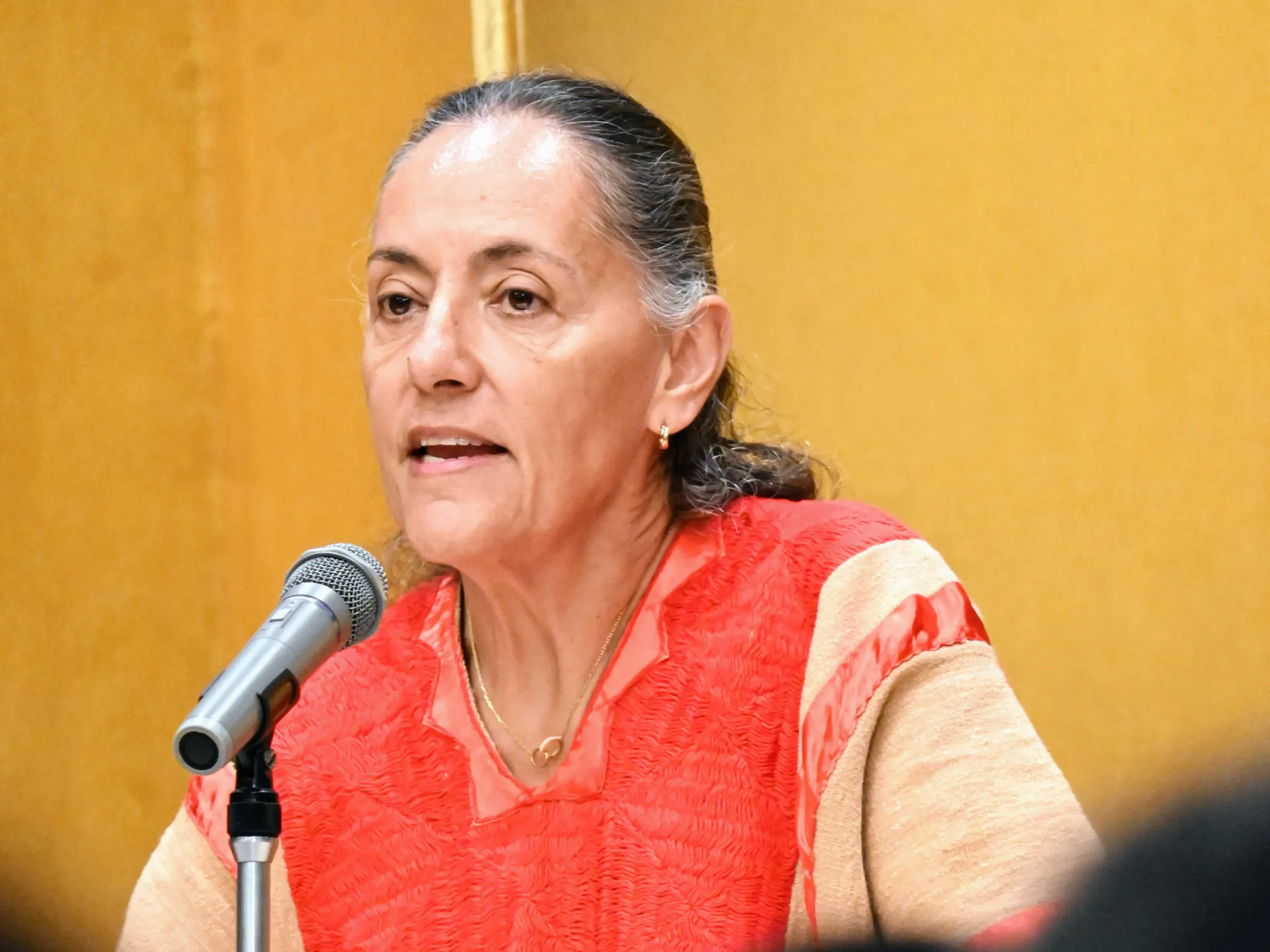
As Mexican Ambassador to Japan, Melba Pría Olavarrieta, said in her speech at the press conference that followed the unveiling of the mural, murals in Mexico have a history of depicting social issues in a positive way and inspiring way. Olavarrieta expressed the hope that it will not only beautify the airport, but provide an opportunity for travelers to consider peace issues, and become a vehicle for sharing Mexico and Japan’s strong peace message to the world.
Olavarrieta made the point that building peace is not just the task of the politicians, but it is something that is also forged through the efforts of all citizens and the connections between them. People marching for nuclear disarmament are also depicted in the mural. Crowdfunding supporters and citizens who contributed to the project will have their names engraved on a commemorative plaque beside the mural, symbolizing that peace is built by many hands, not few.
In an emotional speech, artist Adri del Rocio shared that, “We wanted every brushstroke to carry emotion — the sorrow of loss, the strength of recovery, and the beauty of human connection.”
She concluded with Senji Yamaguchi’s passionate plea to the world at the United Nations in 1982,
No more Hiroshima, [No more Nagasaki], No Hibakusha!
A Global Message, Rooted in Hiroshima
This mural is not just for Hiroshima or Mexico. It belongs to humanity — to everyone who believes that peace is worth painting into existence.
Co-organizer Ichiro Gutiérrez
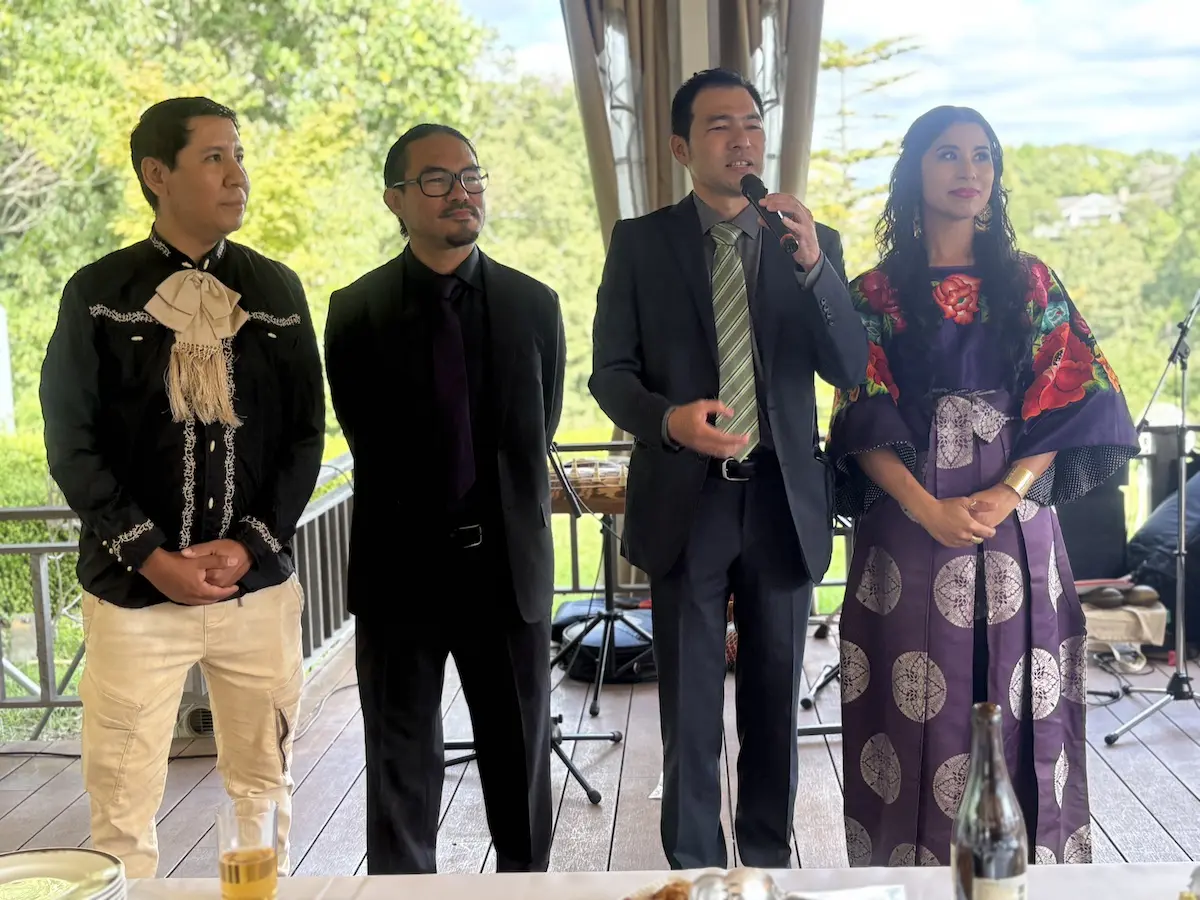
The Hiroshima–Mexico Friendship Mural is more than a piece public art. It is a bridge between cultures, a dialogue between past and future, a canvas of collective memory, and statement of intent. We share the hope of the Mexican Ambassador so powerfully stated in her speech, that this work of art will help pass on the message of the hibakusha to the next generation, and the next, and the next, and provide them with inspiration and encouragement in the continued fight to rid the world of nuclear weapons.
Links
・ Hiroshima-Mexico Friendship Mural IG
・ Artist Adri del Rocio on Instagram
・ Artist Carlos Alberto GH on Instagram