Fuji Musume and the Living Tradition of Japanese Festival Dolls
Japanese dolls have long been vessels of prayer, protection, and love. In Hiroshima, Fuji Musume — a family-run doll purveyor, locally famous for its distinctive TV jingle — offers visitors a chance to encounter this living tradition firsthand.
Founded just three years after the atomic bombing, the shop functions today as both showroom and cultural archive, introducing how seasonal festivals shape everyday life in Japan through dolls that are still made, displayed, and cherished.
The Wisteria Maiden rises from the ashes
It was a stroke of luck that Sumi Oda was not killed in the 1945 A-bomb attack on Hiroshima. Had she not been out of town on August 6, she would have almost certainly been one of the tens of thousands of people who lost their loved ones in the immediate aftermath of the explosion 600m above the city center.
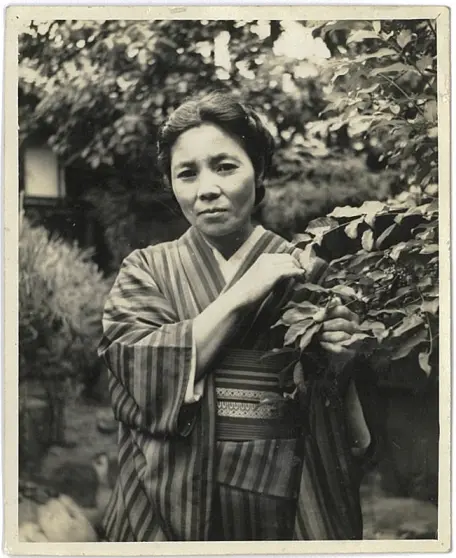
Sumi was the daughter of the owner of Odamasa Shoten, a fabric wholesaler in Hiroshima’s commercial district. She made and sold dolls in a corner of the store. After the blast, photographs show little more than a twisted steel skeleton standing amid the devastation.
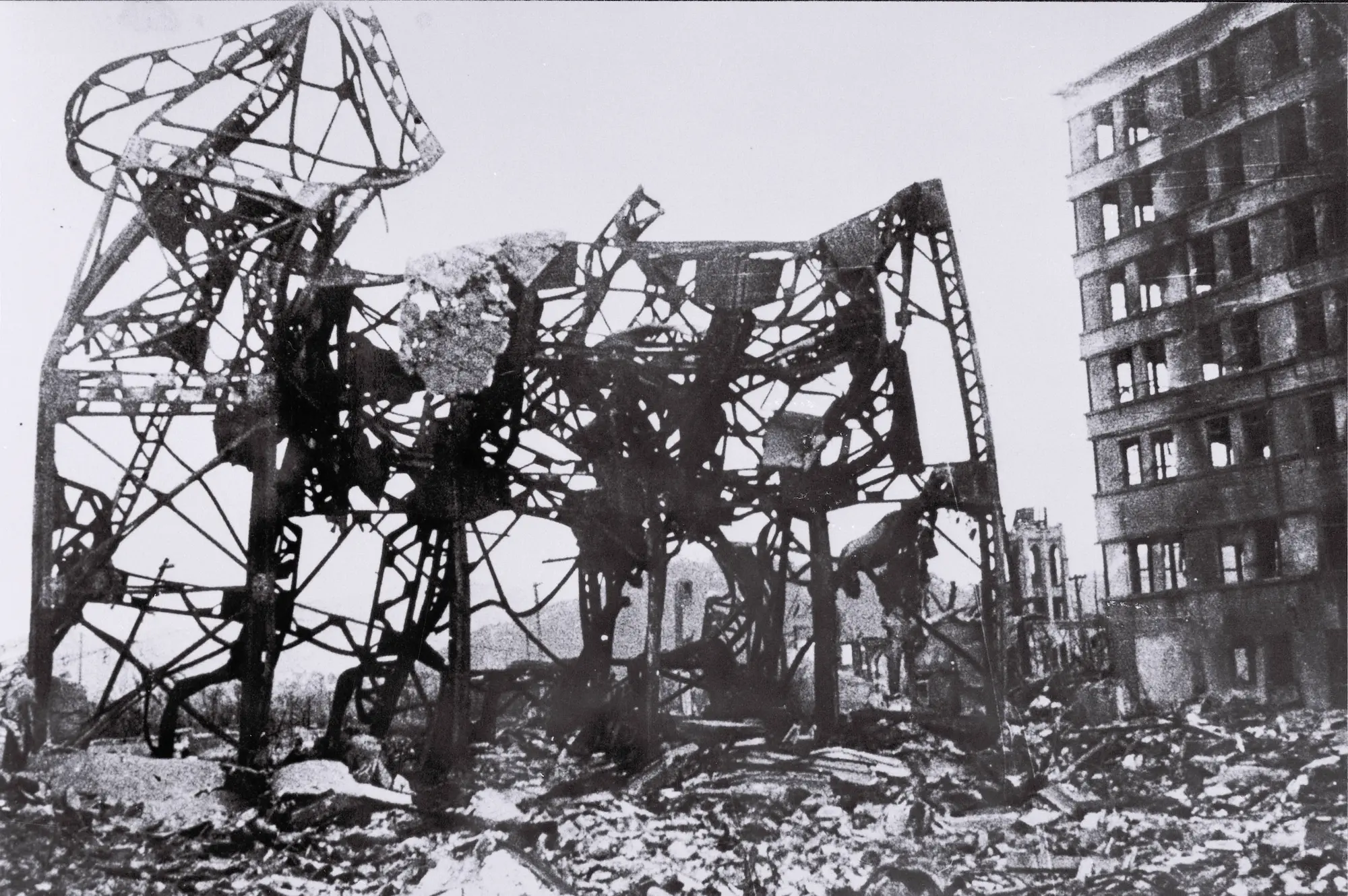
Photo by Masami Oki.
Courtesy of the Association of the Photographers of the Atomic (Bomb) Destruction of Hiroshima
Today, it is difficult to imagine life in those early years of recovery. Yet Hiroshima rose again, and Sumi was among those who helped rebuild it. Though spared by chance, she returned to find the commercial district destroyed. Seeing an opportunity in the occupation forces, she began selling Japanese dolls as souvenirs, using fabric salvaged from storehouses that had survived the blast. Just three years later, she opened what would become the Fuji Musume doll store.
The name Fuji Musume is thought to have been inspired by The Wisteria Maiden, a famous Kabuki dance that dates back to the 1820s, in which the dancer who plays the role of the Wisteria Maiden changes kimono four times.
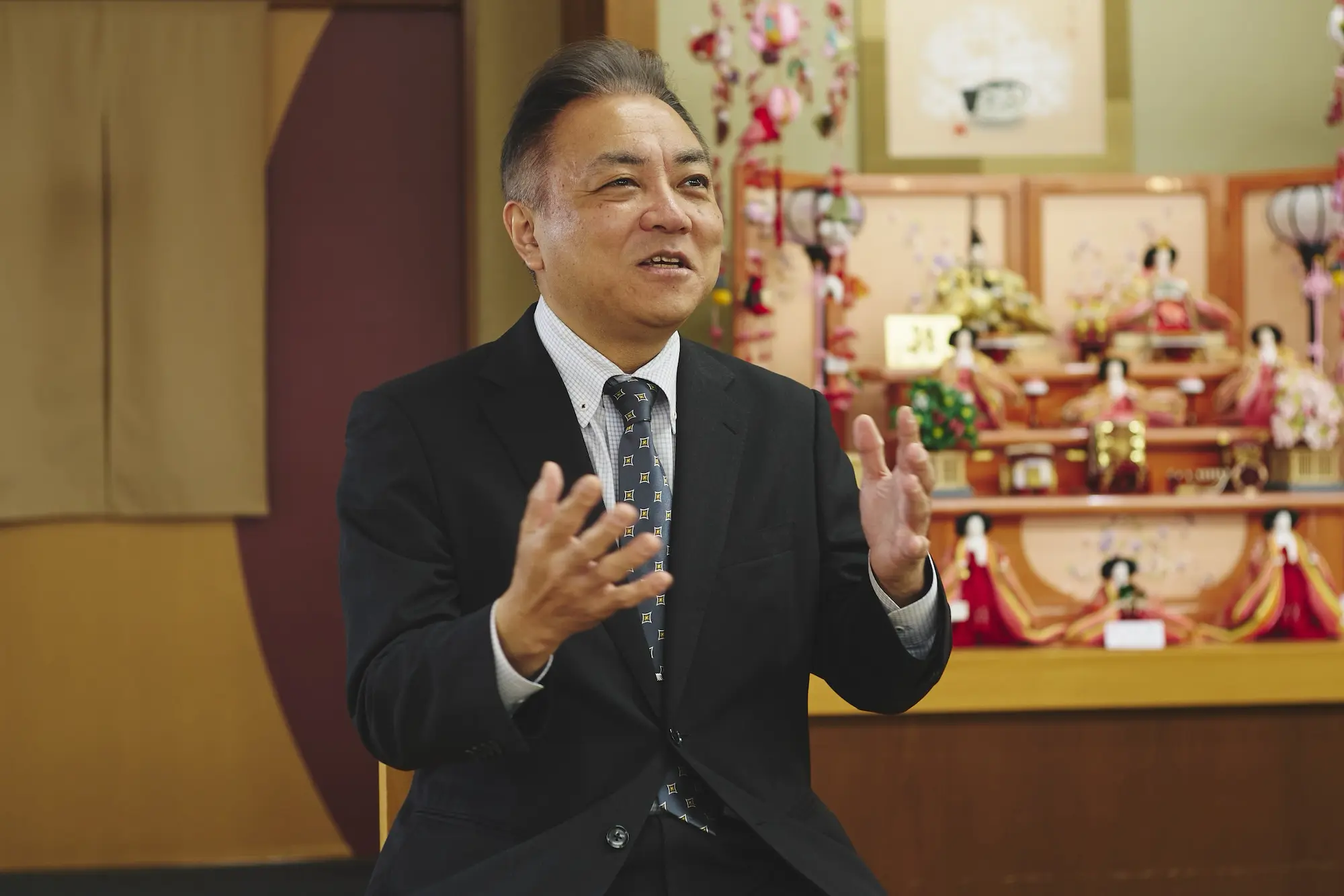
This, however, remains conjecture. As Sumi’s grandson Hiroshi Oda tells me when we meet at the company’s current headquarters near Hiroshima Port, little was formally recorded about those early days. What survives comes largely from family memory, especially stories of his grandmother’s deep knowledge of textiles and her skill in creating her own paper patterns for dolls.

A framed image of a Fuji Musume, depicted in a vibrant kimono, garlanded with wisteria flowers, hangs on the wall. Closer inspection reveals it to be an oshie—a three-dimensional collage made from layered fabric. With quiet reverence, he explains that it was made by his aunt, using techniques passed down from his grandmother herself.
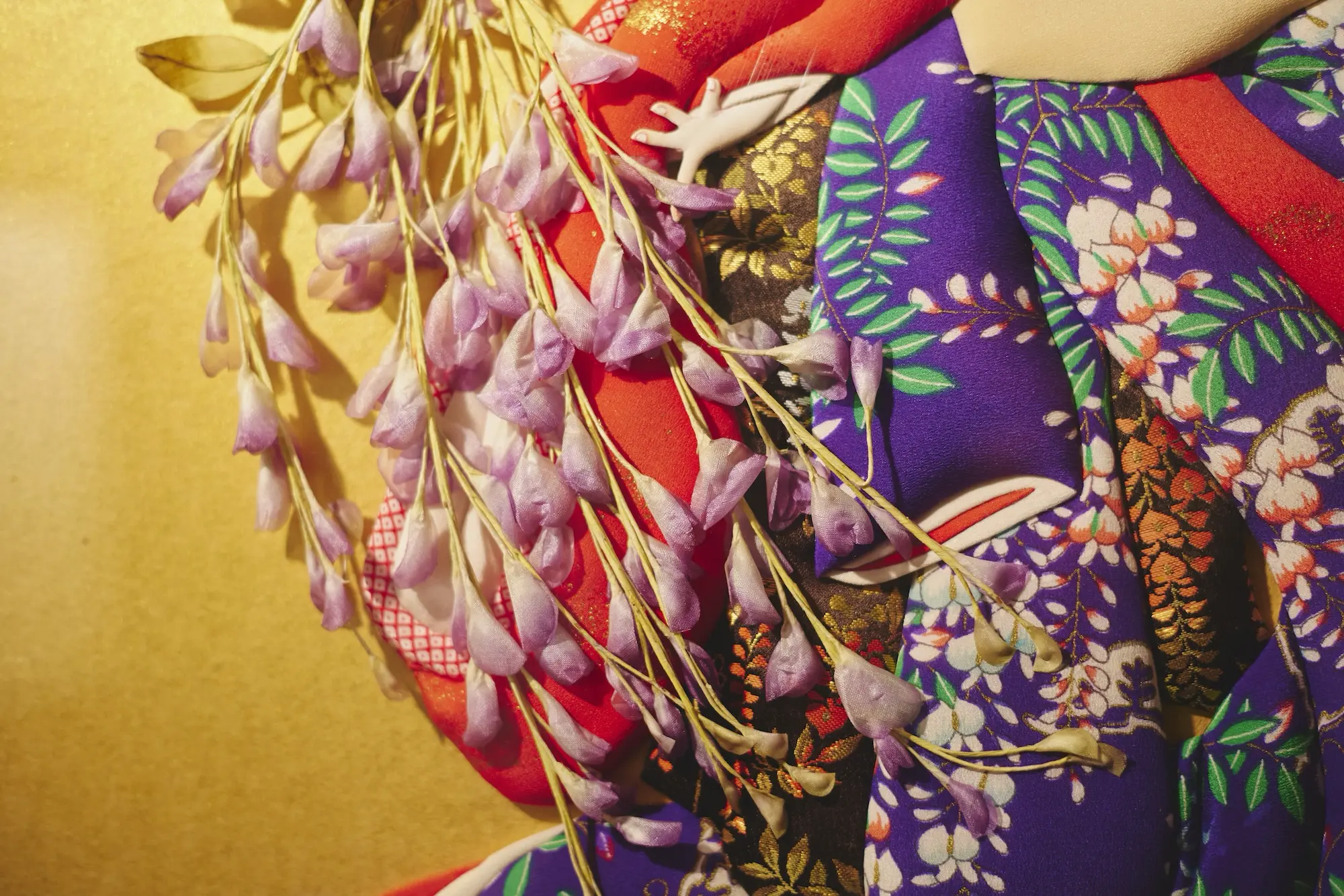
With their roots in ancient hitogata figures, carved from wood and used in rites to ward off illness or misfortune, Japanese dolls have always been more than playthings, he explains.
Hiroshi speculates, “It’s said that homes that display Fuji Musume dolls are particularly blessed with good fortune. I don’t know for sure, but I can feel that my grandmother always cherished her customers and hoped that her dolls would protect children, perhaps from the tragedy she must have witnessed after the bombing.”
Hiroshi’s earliest memories of the family business are of the long, narrow shop his father opened not far from the original site. He recalls it as his playground, populated by women working upstairs who stitched garments, dressed dolls, and indulged his childhood mischief.
The business expanded to meet postwar demand, sourcing dolls nationwide and producing them in-house. But during the 1970s, when Hiroshi was still in elementary school, the company filed for bankruptcy. It was later relaunched under his mother’s name on a smaller scale, yet continued to serve a strong market for traditional dolls.
Reluctant president
Hiroshi never imagined himself continuing the family business. He skipped university and enrolled in vocational school to study IT, drawn to a field that felt more modern and less demanding than retail. When the bubble economy burst and computer work dried up, however, he returned home.
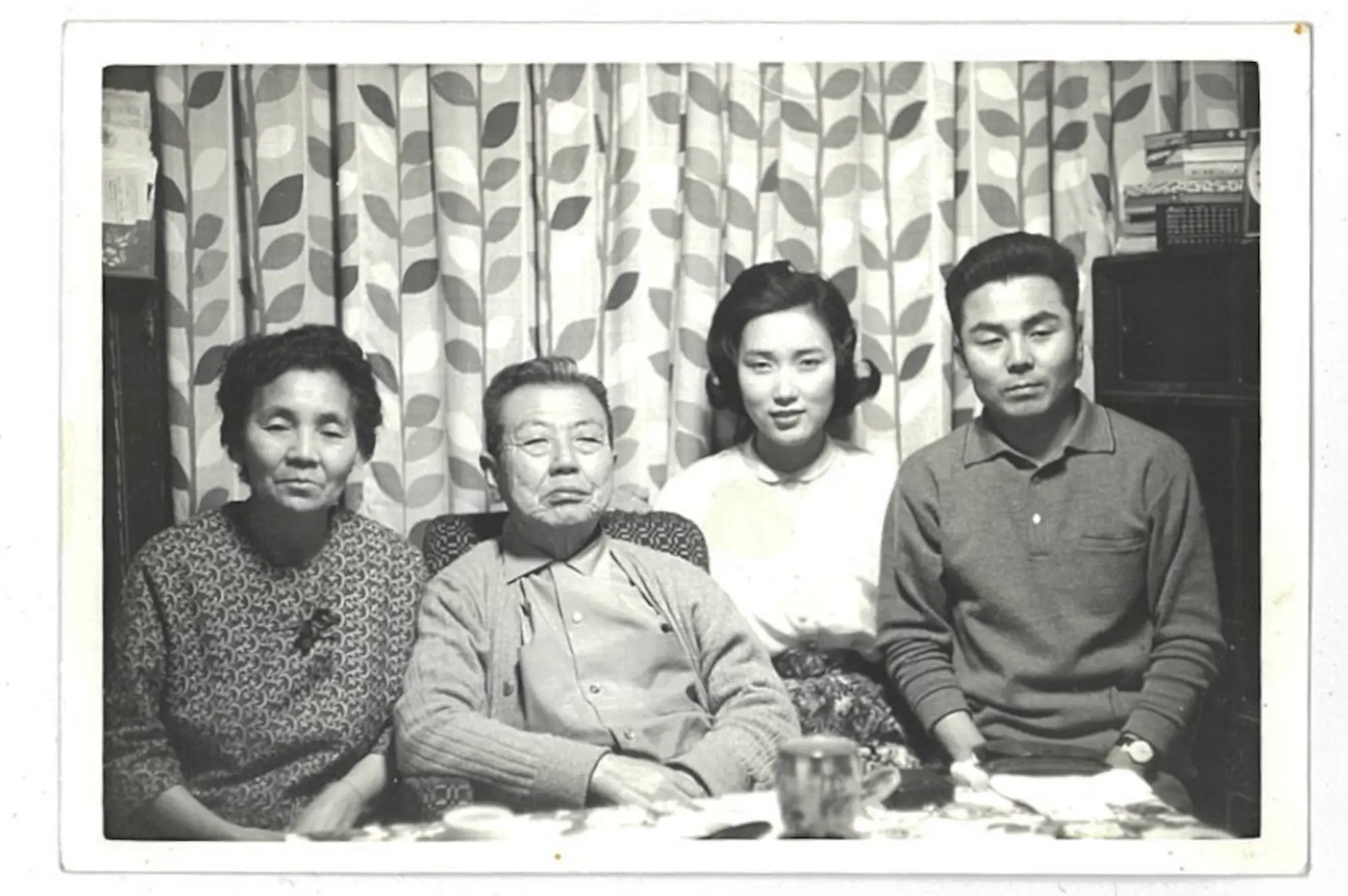
Initially, he applied his technical skills to streamlining the company’s administrative systems. Later, at his father’s suggestion, he tried sales, albeit reluctantly. To his surprise, he found he enjoyed the human side of the work: talking with customers and visiting doll-making centers in Saitama, Shizuoka, and Kyoto.
The artisans he met were generous with their knowledge, teaching him not just how to sell dolls, but how much dedication and care went into making them. When Hiroshi became company president in 2005, that appreciation was already deeply rooted. Watching him guide customers through the showroom today, it is hard to imagine him in any other role.
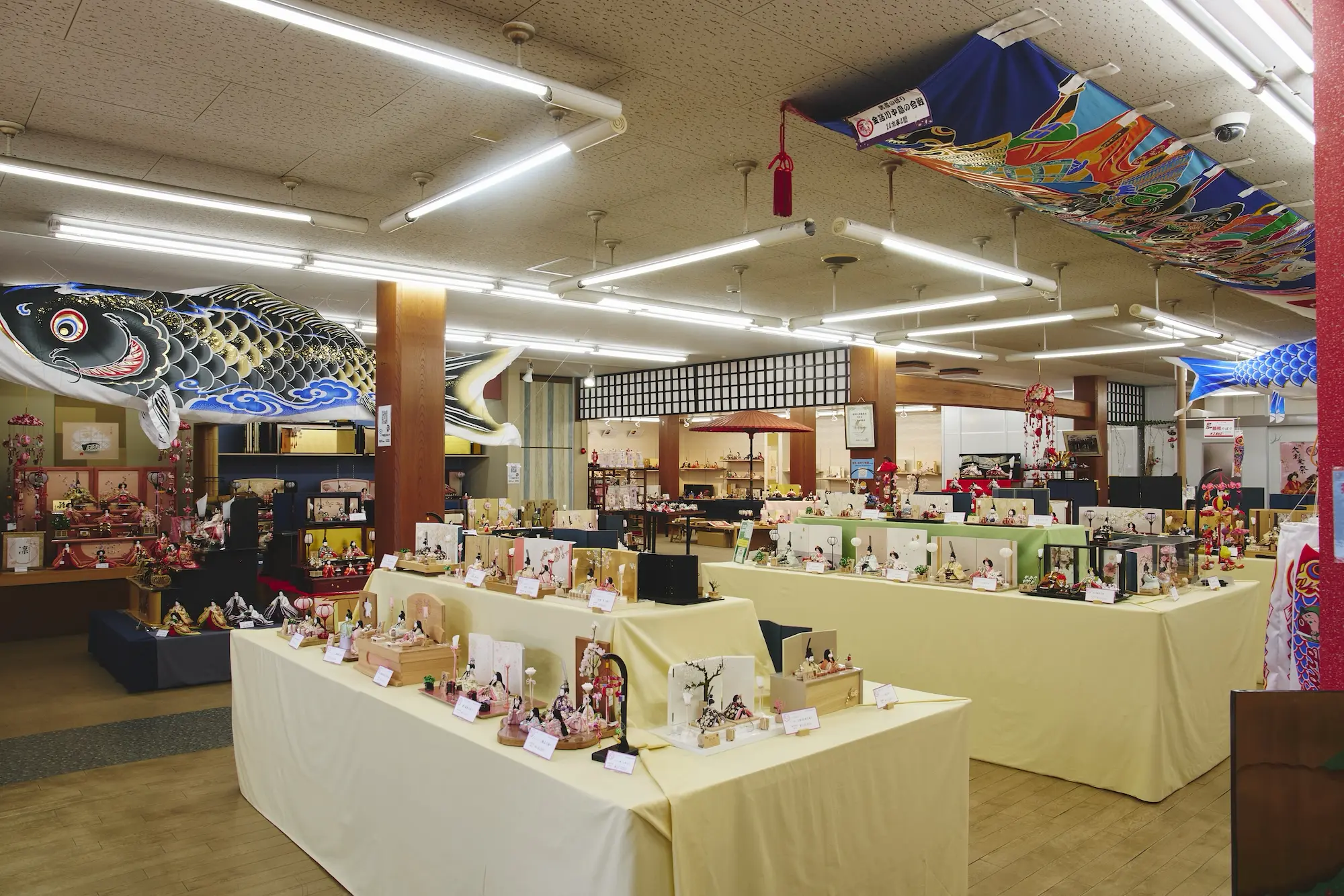
During the cold days of December, the Fuji Musume showroom fills with elaborate Hina Doll displays. This is the season when families with daughters prepare for the Girls’ Festival on March 3, investing in dolls to be displayed year after year, making it one of the busiest times at the shop.
From ritual effigy to beloved cultural icon
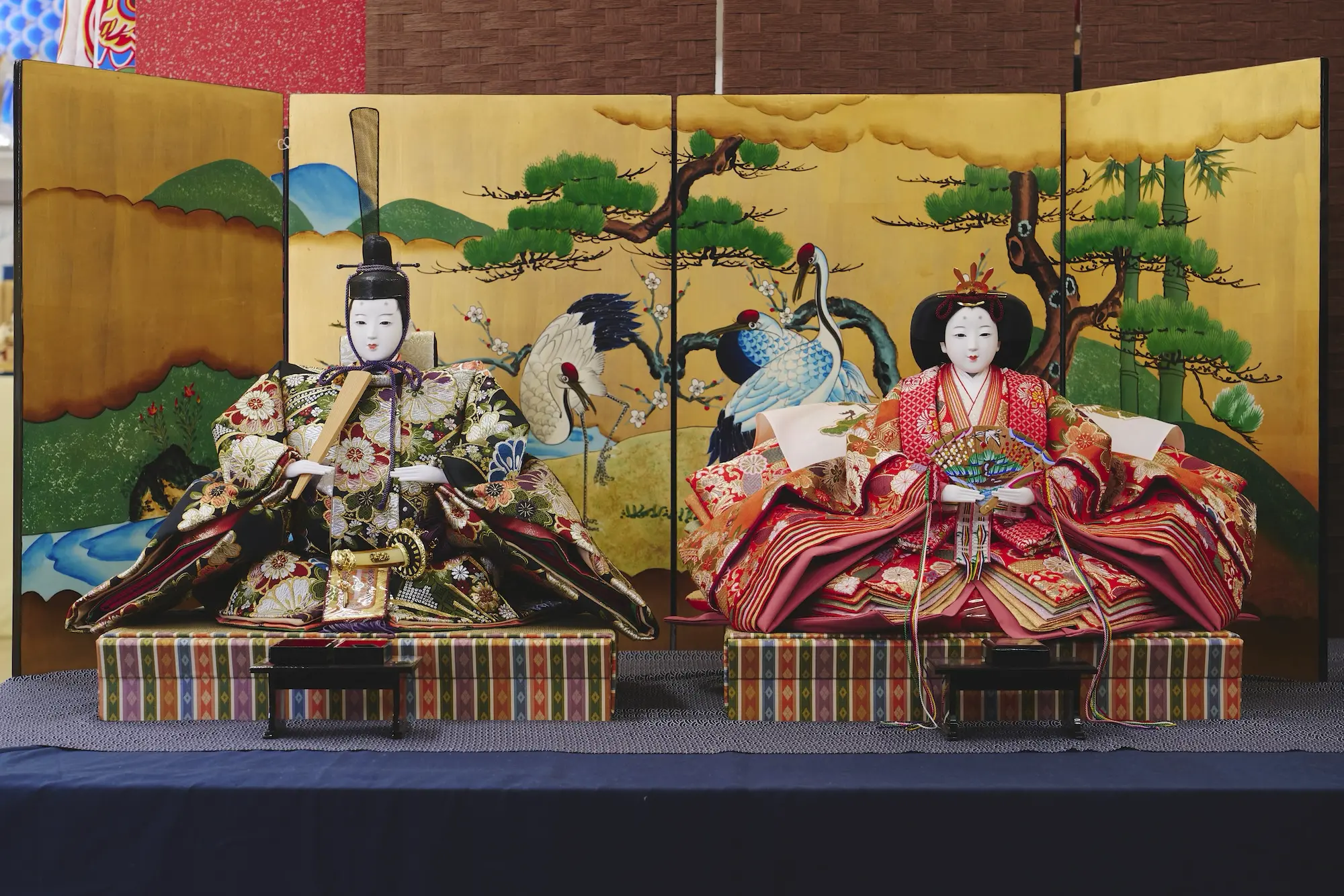
References to playing with dolls (hina-asobi) appear in The Tale of Genji, but it was during the peaceful Edo period that the custom of displaying Hina Dolls truly flourished. In an age still plagued by disease and famine, families displayed them to pray for the health and growth of young girls.
As displays grew more elaborate, competition among families intensified, prompting the Shogunate to impose restrictions on excessive ornamentation. The custom endured nonetheless, sustained by popular attachment.
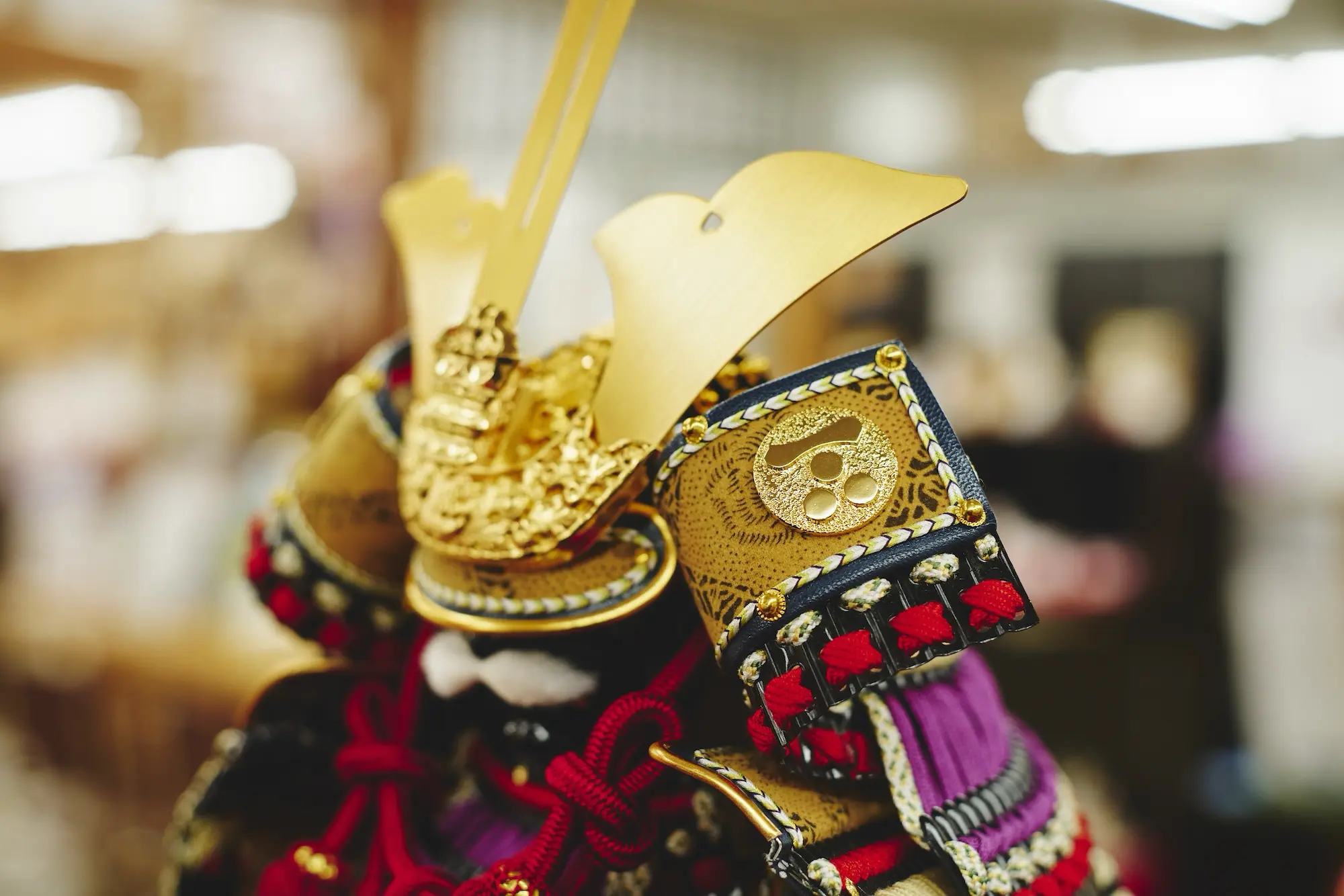
During the same era, ornamental samurai helmets and armor came to be displayed for Boys’ Day on May 5, evolving into today’s Gogatsu Ningyo, figures representing historical and legendary heroes.
More than playthings, repositories of artisanal culture
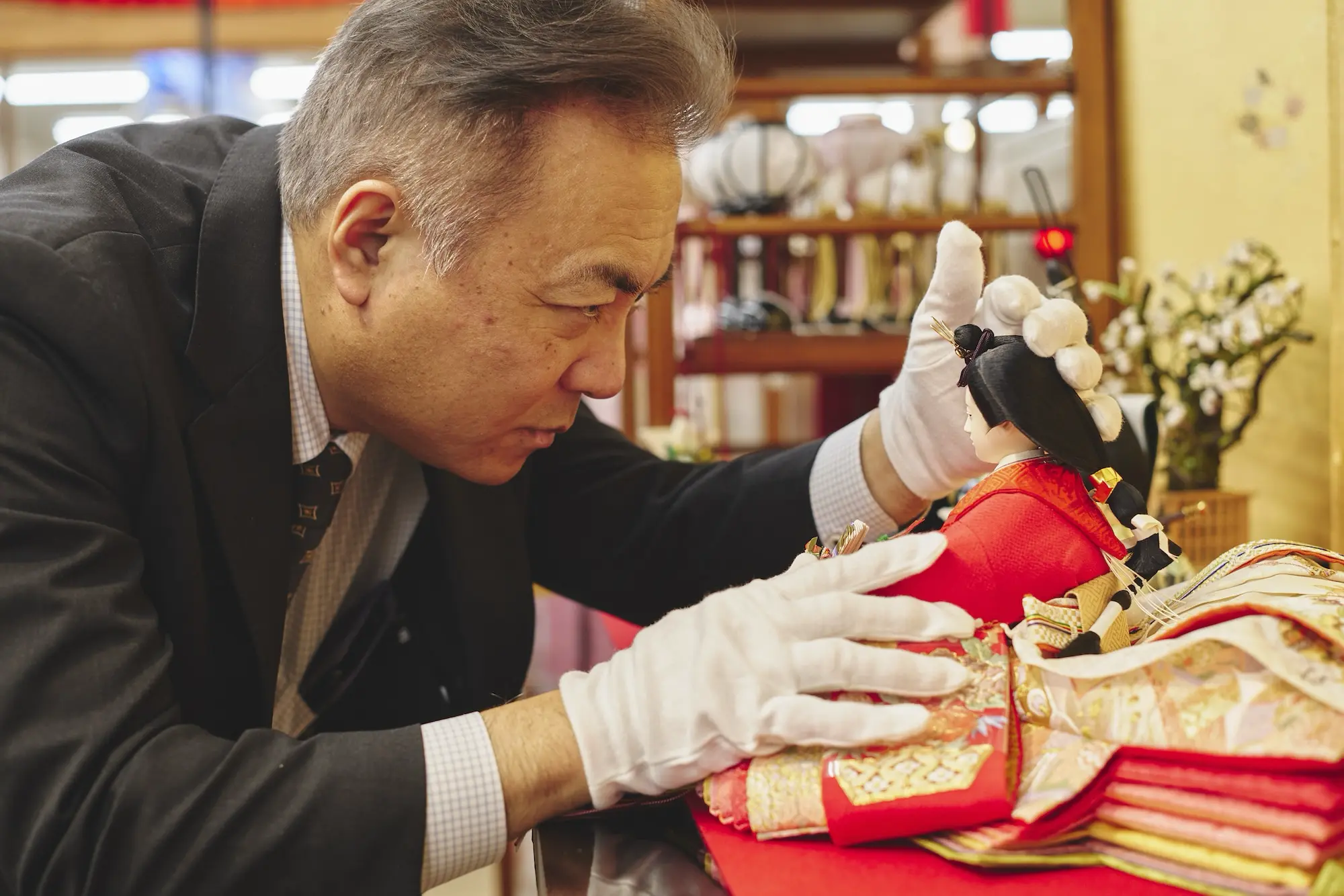
Hina and Gogatsu Dolls have evolved into embodiments of Japan’s finest traditional crafts. Dollmakers must master woodworking, textile arts, lacquer, and painting — skills so refined that some artisans are recognized as Living National Treasures. Continuing the tradition of seasonal display helps preserve these crafts.
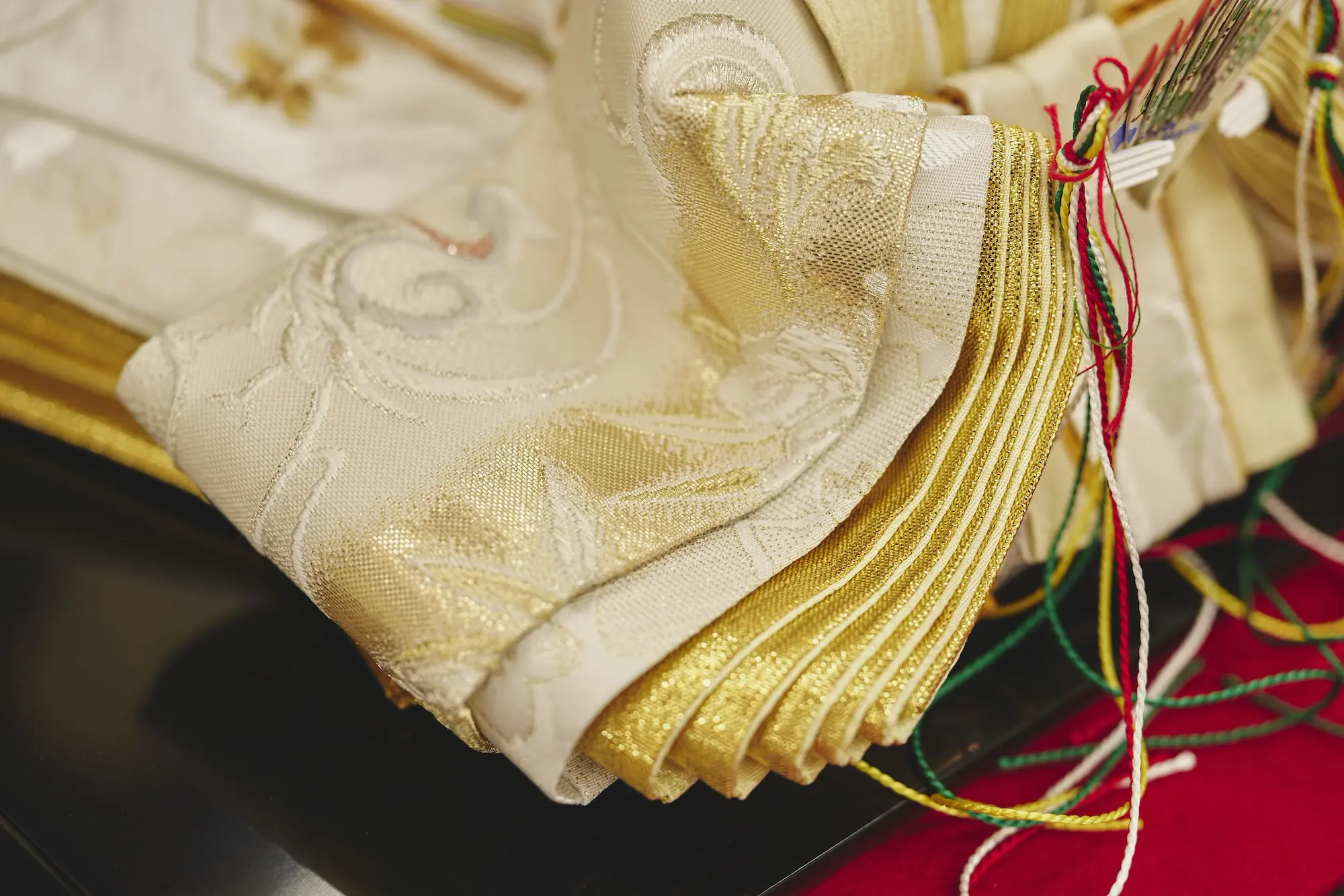
“Can you see how the fabric is layered here?” Hiroshi asks as we walk through the showroom. He explains that the finest Hina Dolls are dressed using the hon-gise technique which involves creating miniature kimono cut, sewn, and layered exactly like full-size garments, creating natural fullness and graceful silhouettes.
Great care is taken, even with unseen details. Hands and feet are carved from wood, accessories fashioned from leather, metal, or gemstones, and costumes sewn from silk woven by master craftsmen.
Prices reflect the craftsmanship, and these dolls are often passed down for generations. More affordable displays, made with simpler techniques, are also available. For Hiroshi, however, the value lies not in price but in the act of displaying dolls as an expression of love and care for children.
The culture of Japanese dolls in a changing world
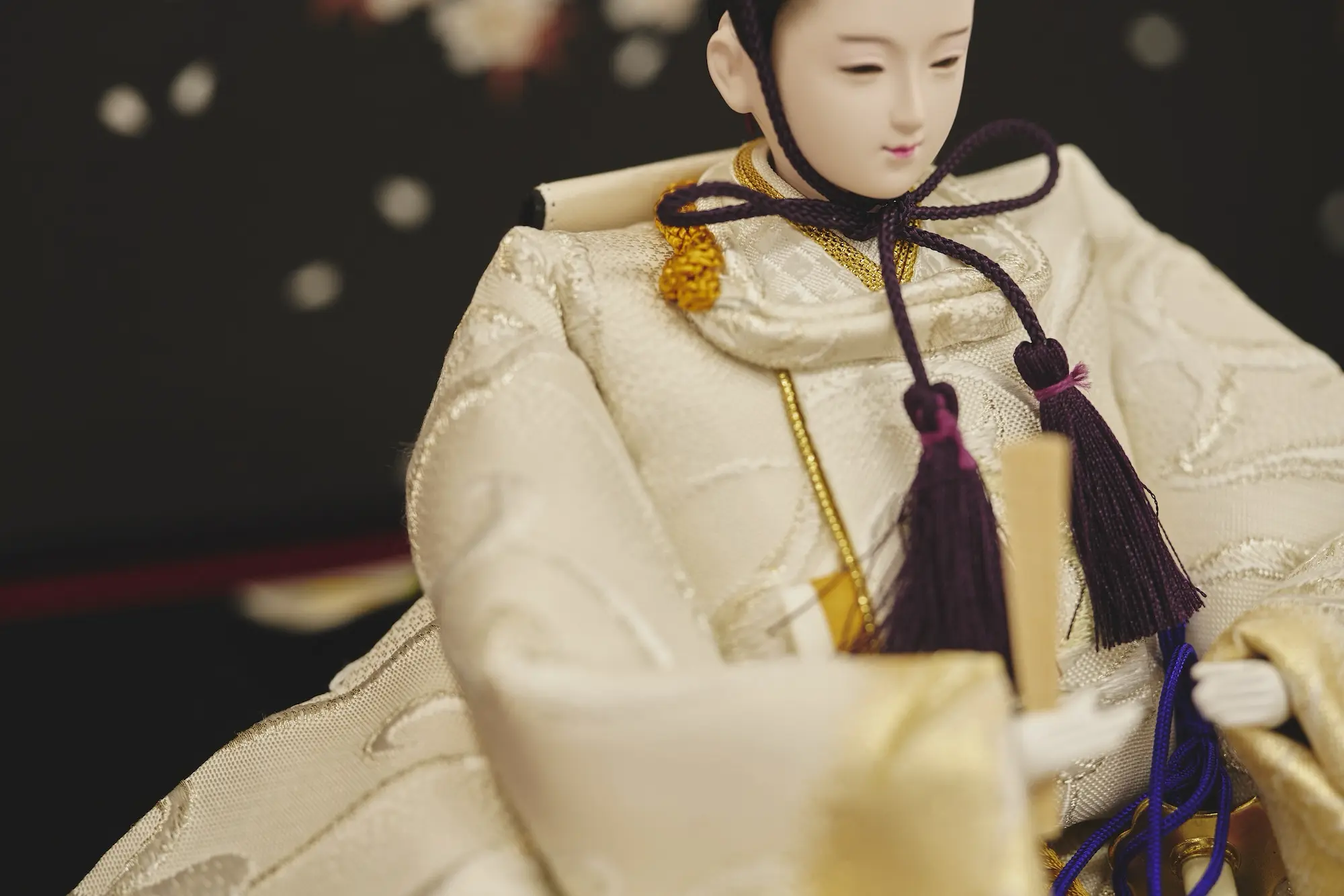
Japanese society has changed dramatically since Hiroshi’s youth. Declining birth rates and smaller living spaces have reshaped how families approach traditional displays. Today, parents are more involved in selecting dolls, and artisans increasingly respond to modern tastes. Alongside classic designs are lighter fabrics, gentler expressions, and more compact displays suited to contemporary homes.
Rather than lamenting change, Hiroshi sees it as his role to remind younger generations of the cultural significance of the tradition — a practice that has endured political reform and social upheaval for centuries.
New directions and looking beyond Japan
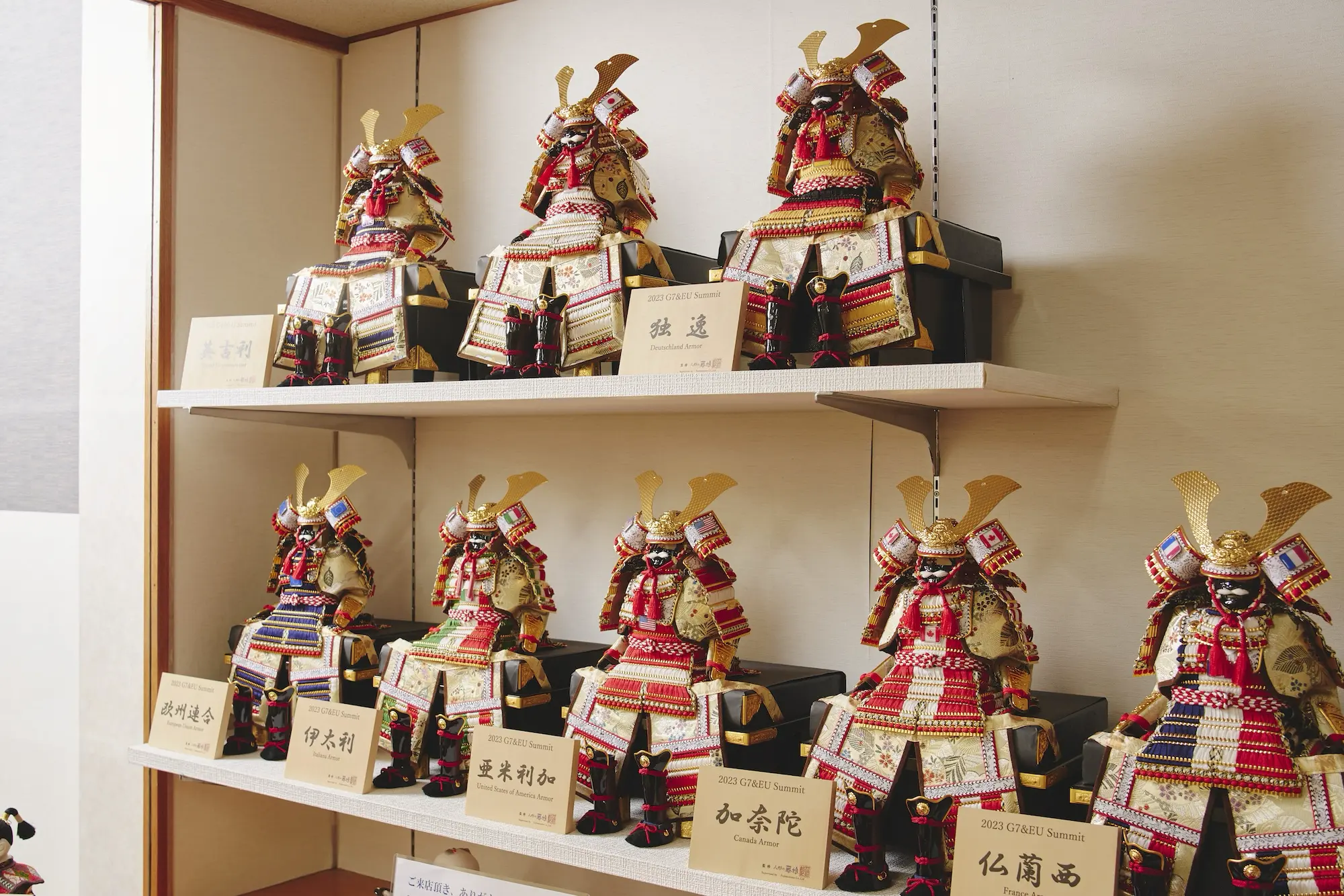
Adaptation also means innovation. In one display case are Gogatsu Ningyo created for the 2023 G7 Summit in Hiroshima, featuring traditional armor in the colors and motifs of participating nations. Two of these unique dolls, those of Italy and France, now proudly stand in their respective embassies in Tokyo.
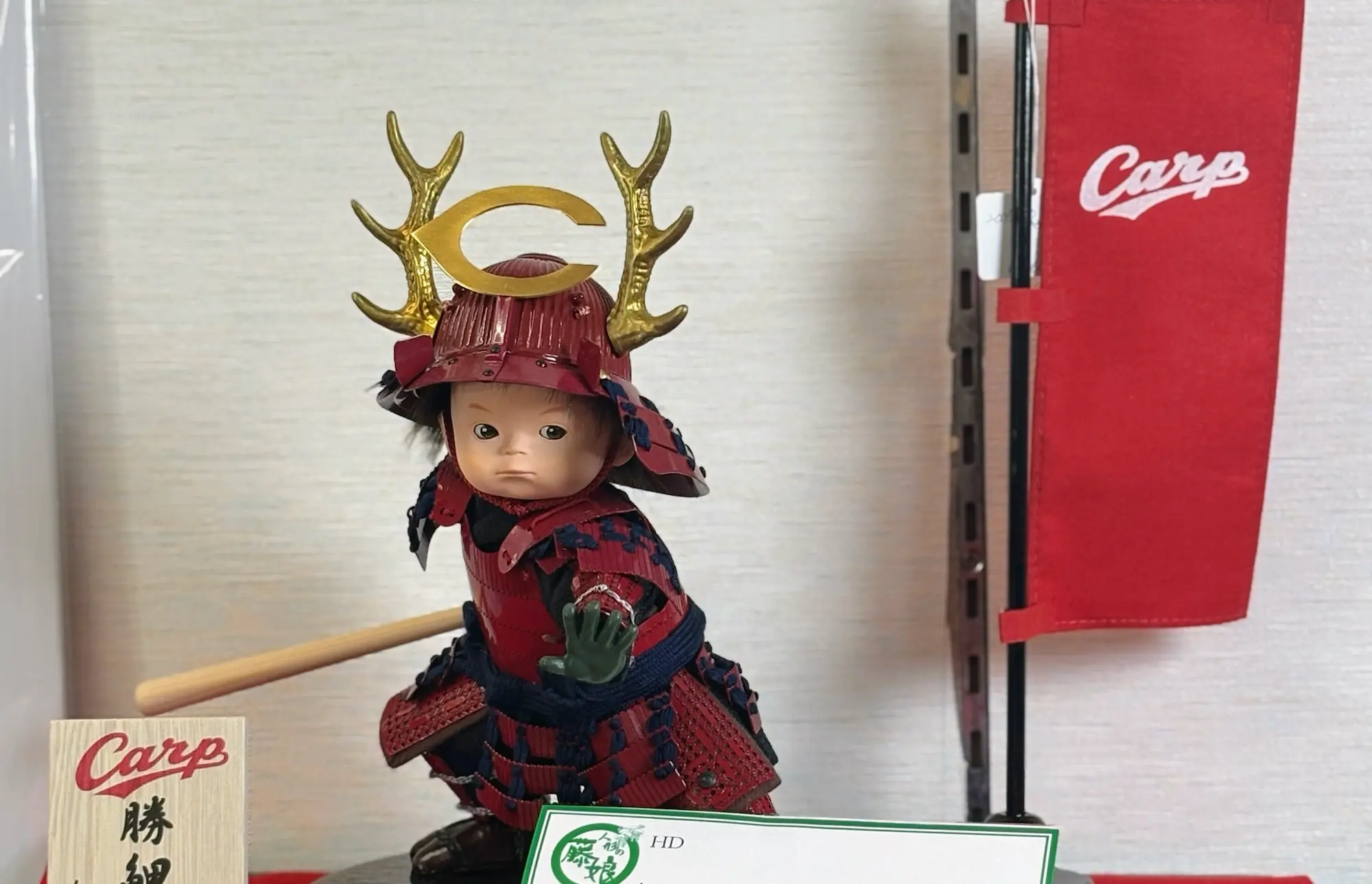
Nearby, stand figures of Carp Boya, the much-loved mascot of the Hiroshima Toyo Carp baseball team, reimagined as a young samurai wielding a bat instead of a sword.
With the expansion of Hiroshima Port’s cruise facilities, Fuji Musume has also begun welcoming more overseas visitors. Many passengers spend time near the port, making the showroom an easy and meaningful cultural stop.
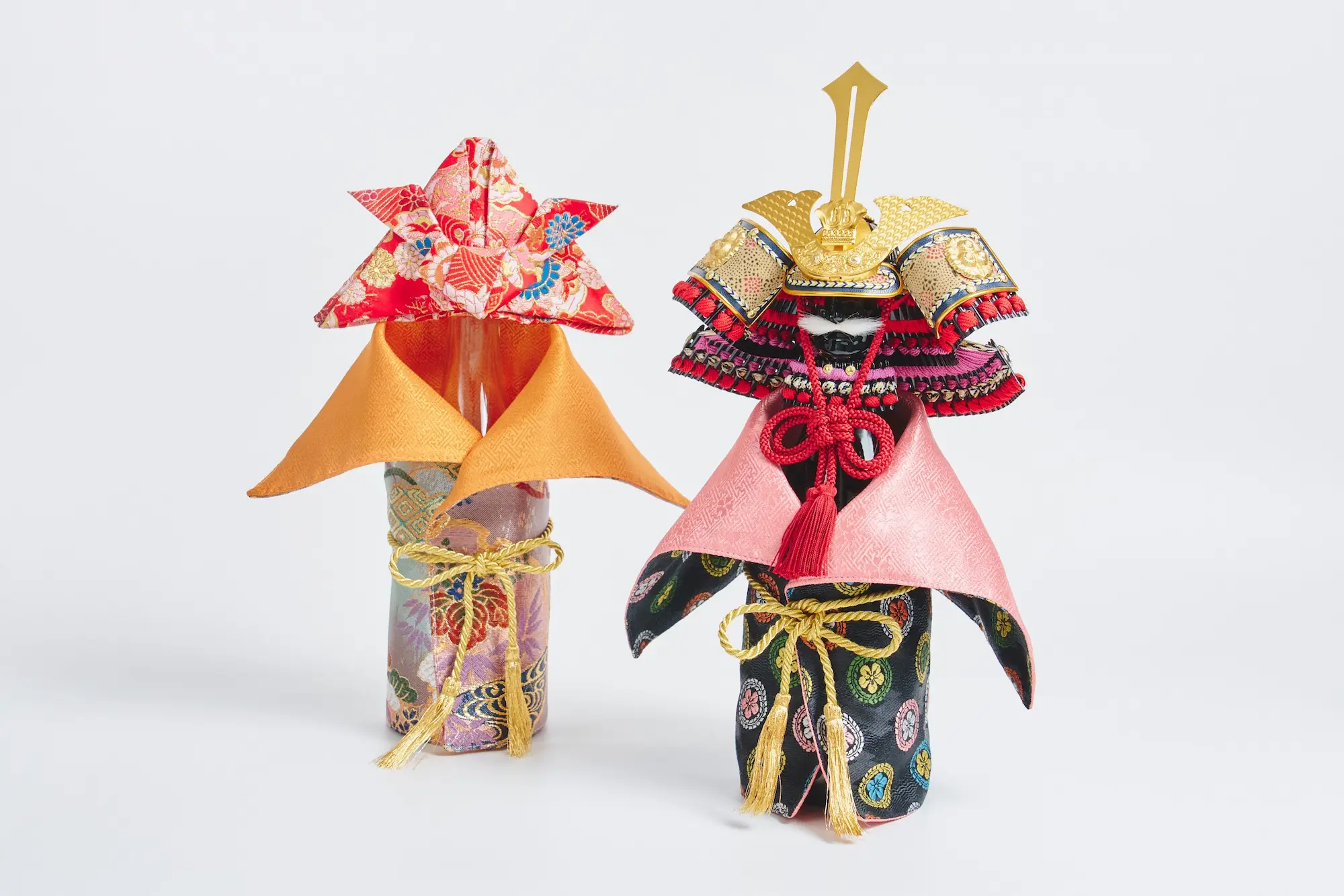
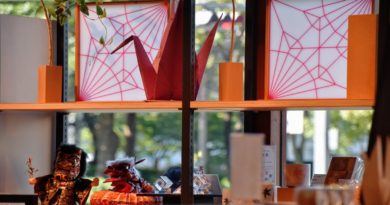
Alongside dolls, the shop offers handmade accessories crafted from leftover kimono textiles — purses, book covers, bottle wraps, and name-card cases — allowing visitors to take home a small piece of the tradition.
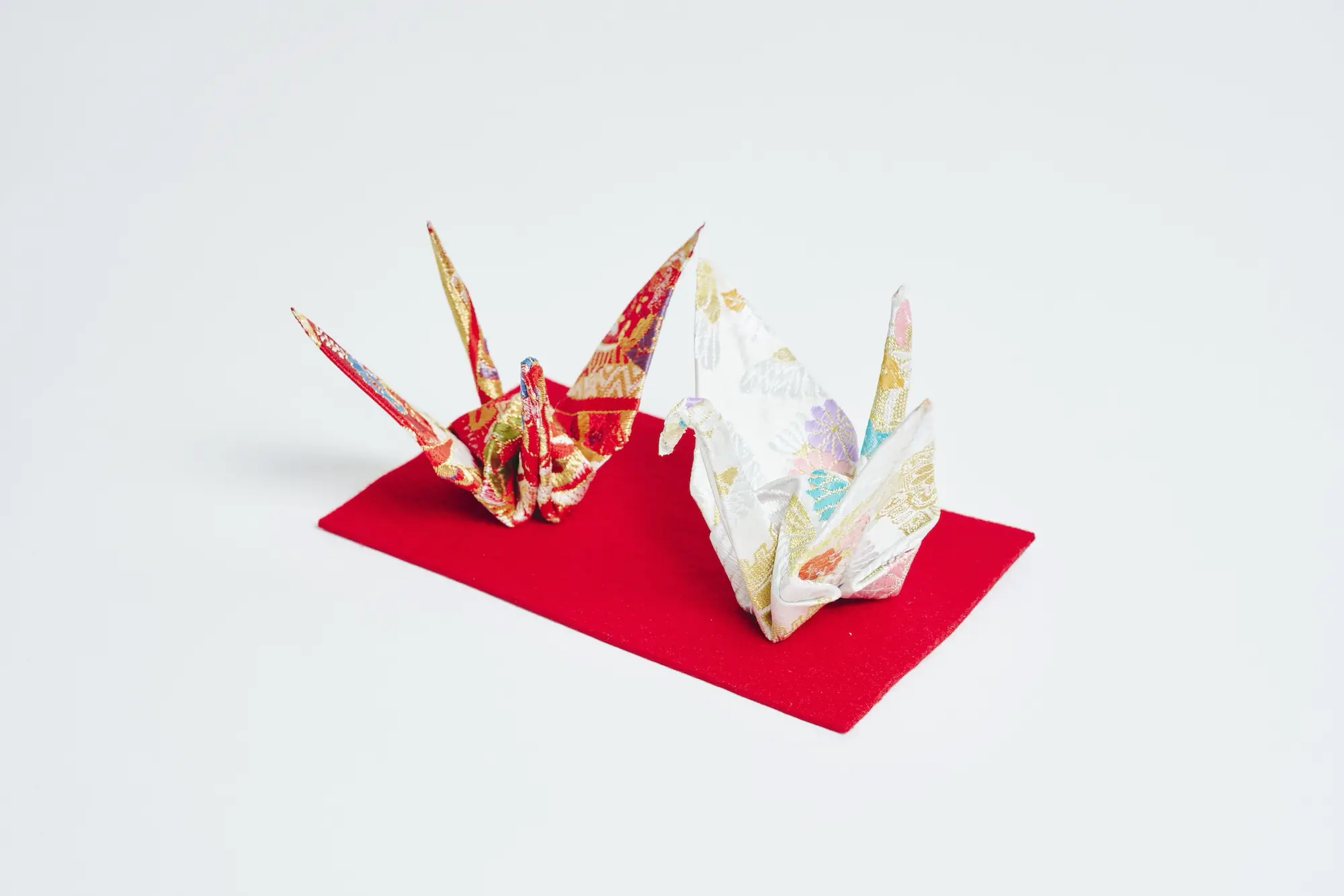
Particularly appropriate are their hand-folded pairs of orizuru cranes, which symbolize peace, marital fidelity, and devotion.

Longtime employee Kashihara-san speaks warmly of her role helping families mark important moments. “There aren’t many sales jobs where every customer comes to celebrate something joyful, like the birth of a grandchild,” she says. It’s a spirit of welcome she hopes overseas visitors will remember.
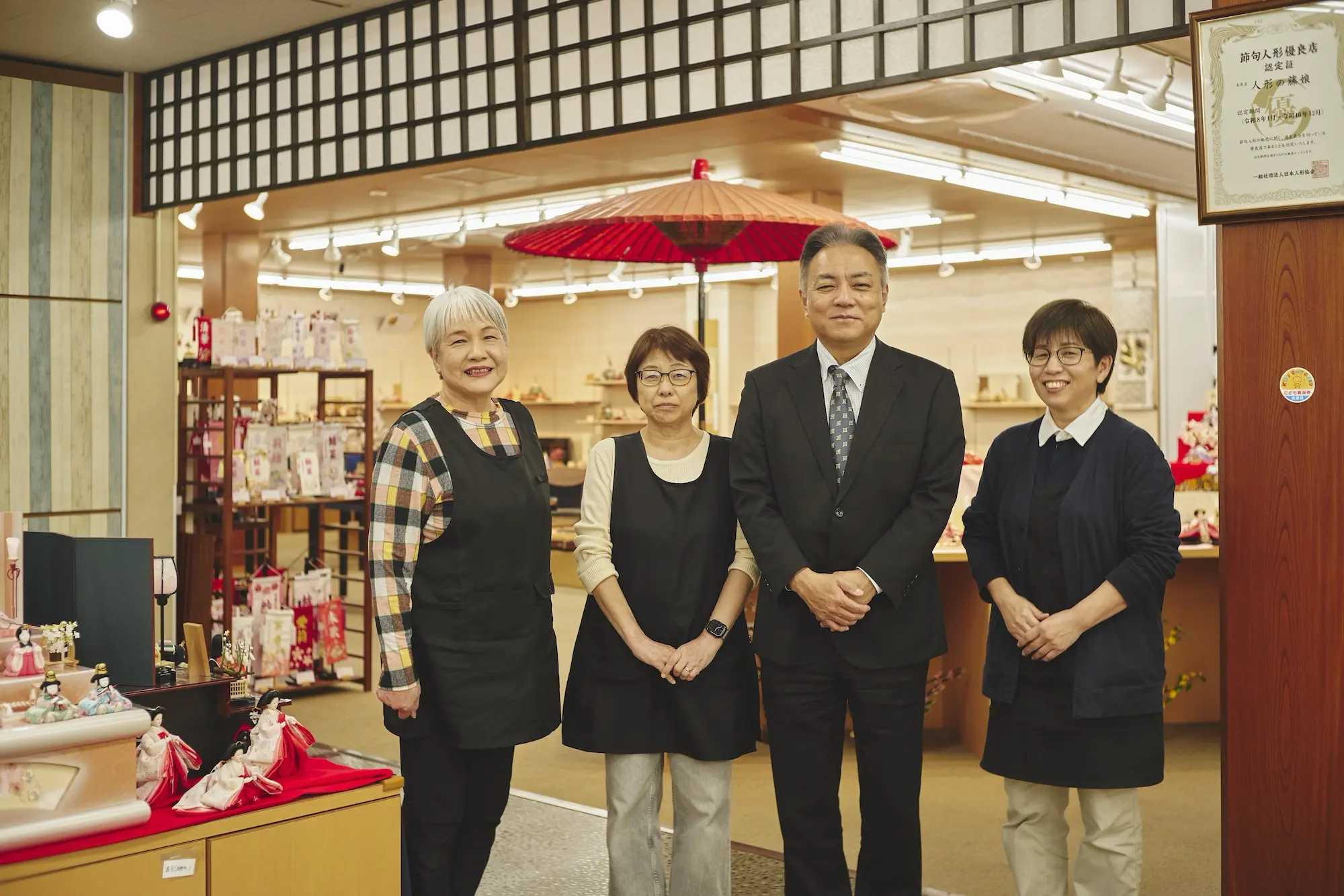
As we part, Hiroshi Oda returns to the thought that guides his work. “The styles may change,” he says, “but displaying these dolls year after year is a beautiful tradition. I like to think that when children grow up, they can look at them and know they were loved — and remember their grandparents with affection. And we are here to help, as a kind of bridge to this tradition.”
Fuji Musume
The widest selection of Hina Dolls can be viewed from December to February, and Gogatsu Ningyo from March to May.
Opening hours: 10:00-18:00 every day
Access: 5 minutes on foot from Ujina Yonchome Streetcat Stop
Google Map: https://maps.app.goo.gl/S5ZCqATfxvwP6vPJAComing to Hiroshima by Cruise Ship?
Easily reached from Hiroshima Port, Fuji Musume makes a rewarding shore-excursion stop for travelers seeking something beyond the city’s other attractions. The Fuji Musume showroom is 5 minutes by car or a 20-minute walk from Hiroshima Port Cruise Ship Terminal.