

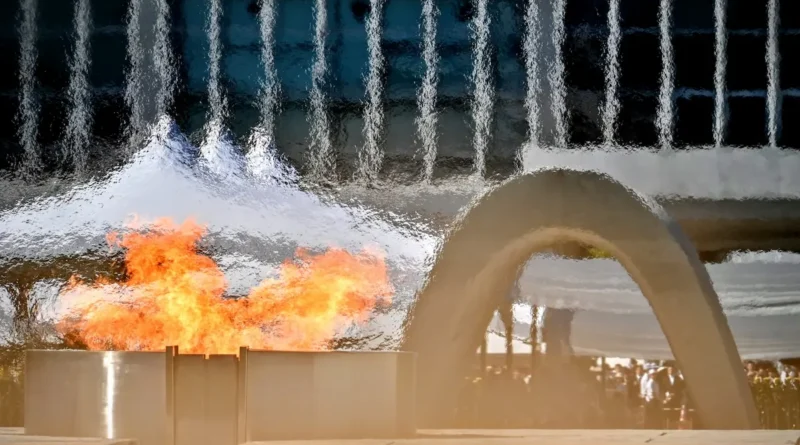
81 Years On: Hiroshima Marks Anniversary Amid Widening Rift Over Nuclear Policy
Hiroshima observed the 81st anniversary of the atomic bombing on August 6, 2026, with the annual Peace Memorial Ceremony in Peace Memorial Park, drawing roughly 50,000 attendees including hibakusha (survivors of the A-bomb attack), bereaved families, and representatives of 121 countries, territories, and the European Union.
This year’s ceremony was notable both for the tone of its official addresses and for a sharp, public disagreement that played out afterward between Prime Minister Sanae Takaichi and hibakusha groups over the future of Japan’s nuclear policy.
The Peace Memorial Ceremony: Four Messages
As in past years, the ceremony featured speeches from four key figures — the Mayor of Hiroshima, the Governor of Hiroshima Prefecture, two child representatives, and the Prime Minister — each offering a different vantage point on the same anniversary. Full texts of all four are available on GetHiroshima:
- Hiroshima Peace Declaration (Mayor Kazumi Matsui)
- Peace Message (Governor Mika Yokota)
- Children’s Commitment to Peace (Yu Kakizaki and Kazuki Kono)
- Address by Prime Minister Sanae Takaichi
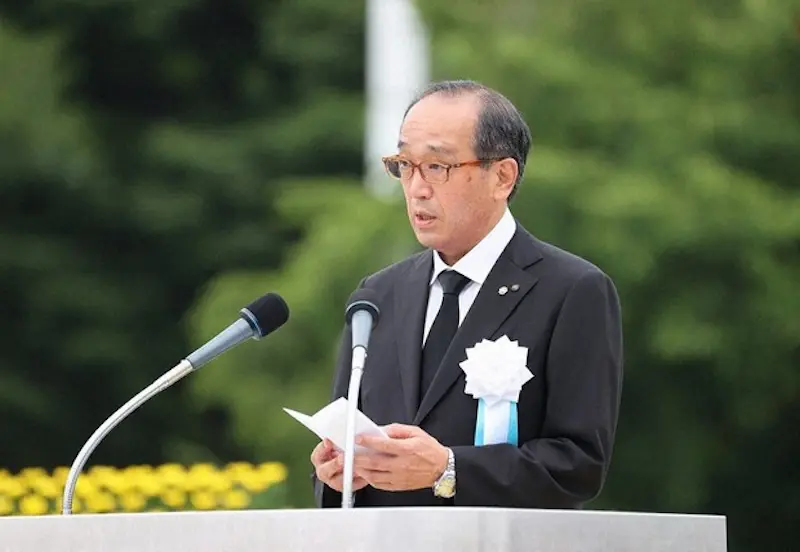
Mayor Matsui, delivering his 16th Peace Declaration, struck the most pointed note of the four, tying this year’s remarks directly to the collapse of this year’s Nuclear Non-Proliferation Treaty (NPT) Review Conference, which failed to adopt a final document for the third consecutive time. He placed responsibility for that failure squarely on “political leaders who place blame on others to justify their own behavior,” warning that continued reliance on nuclear deterrence and the “legitimization of violence” by the international community was pushing a nuclear-free world “further into the distance.” Matsui called on the Japanese government to participate as an observer in November’s review conference for the Treaty on the Prohibition of Nuclear Weapons (TPNW) and to “ratify the treaty without delay” — a treaty Japan has neither signed nor observed. Full text here.
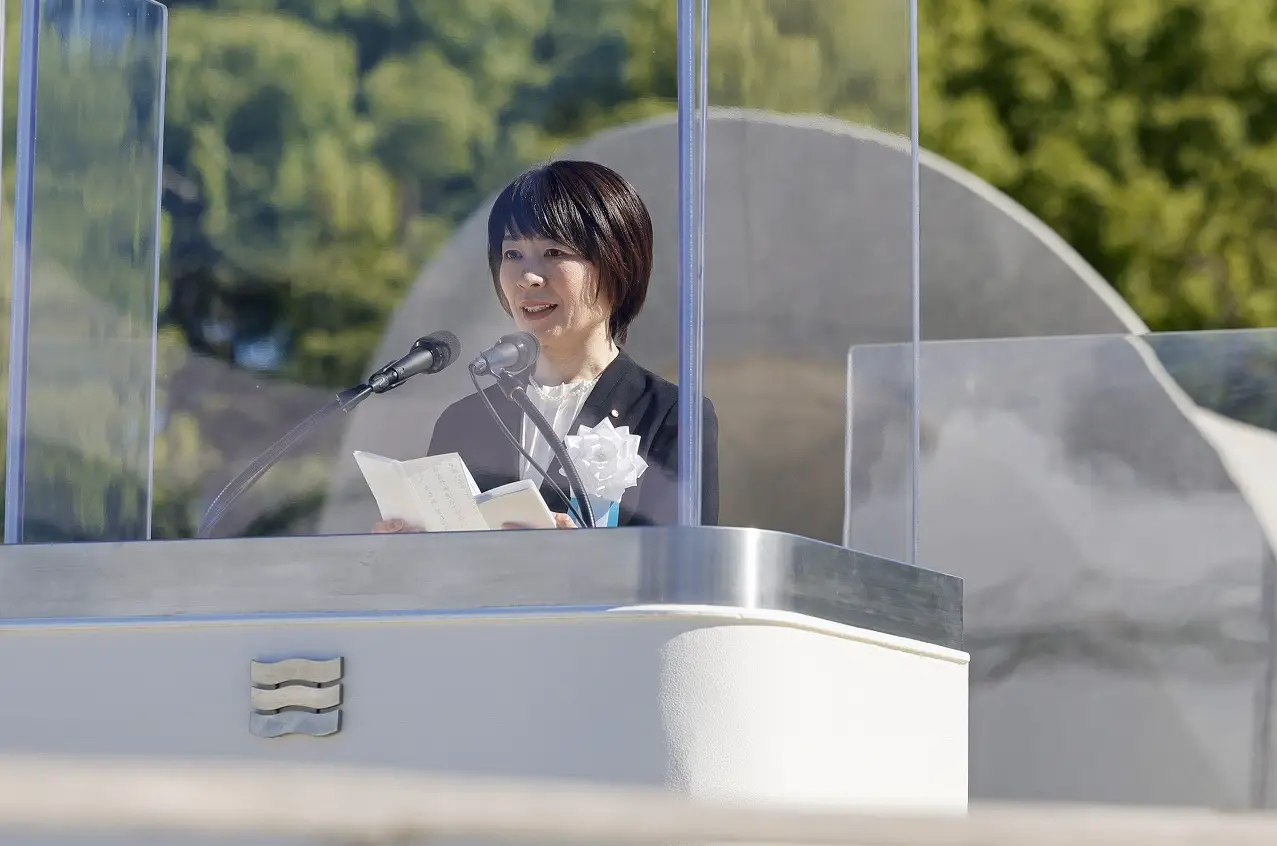
Governor Yokota, delivering her first Peace Message since taking office, was similarly direct in her critique of nuclear deterrence itself, calling it “a fundamental contradiction” that “fosters distrust among nations, fuels the arms race, and destabilizes the world,” and stating plainly that “we must break away from nuclear deterrence.” Full text here.
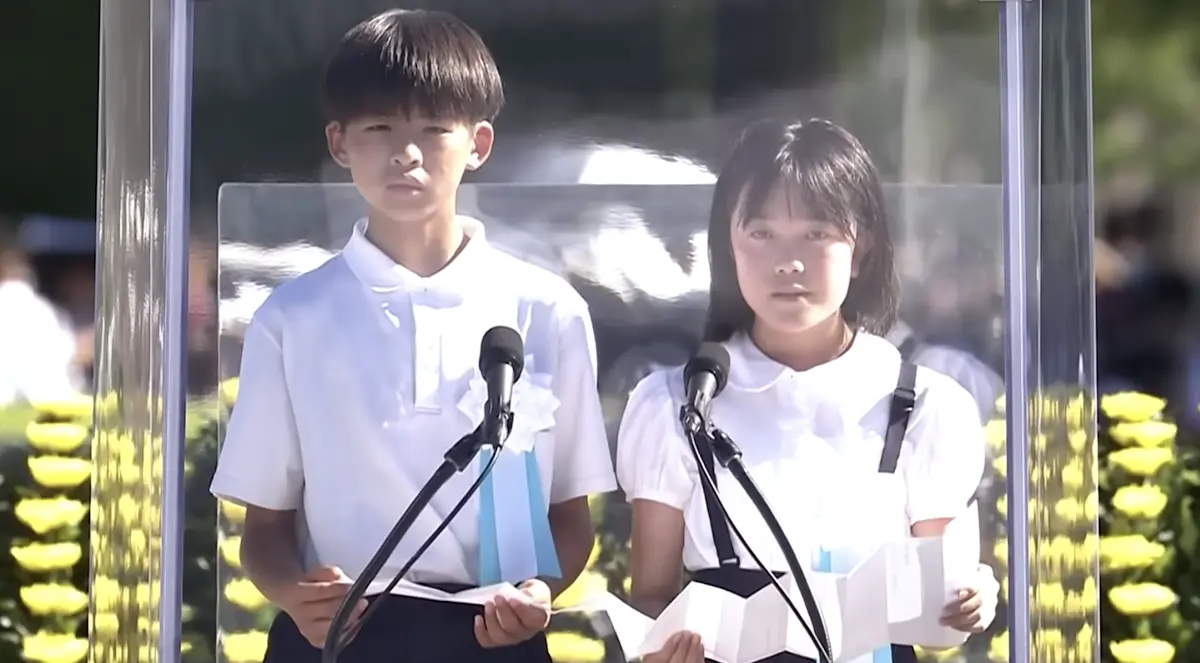
This year’s two child representatives, Yu Kakizaki of Takasu Elementary School and Kazuki Kono of Konan Elementary School, delivered the ceremony’s always moving Commitment to Peace, describing themselves as “the last generation to hear about the atomic bombing directly from the hibakusha themselves” and framing peace as something that “all of us around the world must build together.” Full text here.
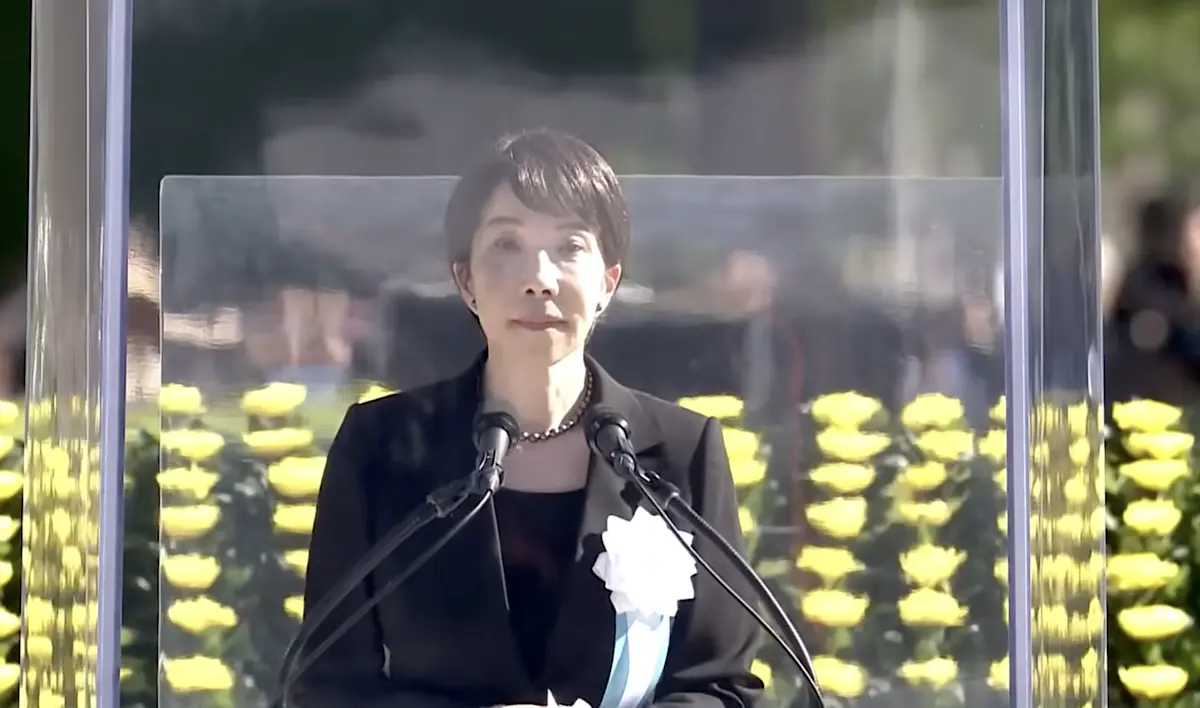
Prime Minister Takaichi’s address, her first at the ceremony since taking office, kept closely to the diplomatic language used by her predecessors — reaffirming Japan’s commitment to the Three Non-Nuclear Principles, its self-description as “the only country to have experienced the horror of nuclear devastation in war,” and its “realistic and practical” approach to disarmament under the NPT framework and the Hiroshima Action Plan first announced by former PM Kishida in 2022. Full text here.
“Realistic and Practical”
The “realistic and practical” formula has long been the Japanese the government’s standard description of its approach to nuclear disarmament. It is a kind of shorthand for pursuing disarmament only through channels that keep nuclear-armed states at the table — the NPT, the CTBT, and the Hiroshima Action Plan — while explicitly declining to join the Treaty on the Prohibition of Nuclear Weapons (TPNW), on the grounds that a treaty with no nuclear-armed signatories isn’t considered “realistic.”
Critics read this as a euphemism for continued reliance on the US nuclear umbrella. The Japan Federation of Bar Associations made this case explicitly in a 2025 resolution, arguing that pursuing disarmament “in a form that doesn’t go against the wishes of nuclear-weapon states” is next to impossible while those states remain heavily dependent on their arsenals, and that Japan’s approach — premised on continued reliance on deterrence — falls short of the responsibility it bears as the only country to have suffered a wartime atomic bombing. Government representative consistently fall back on the “realistic and practical” trope when challenged to ratify the TPNW.
A Tense Meeting With Hibakusha Groups
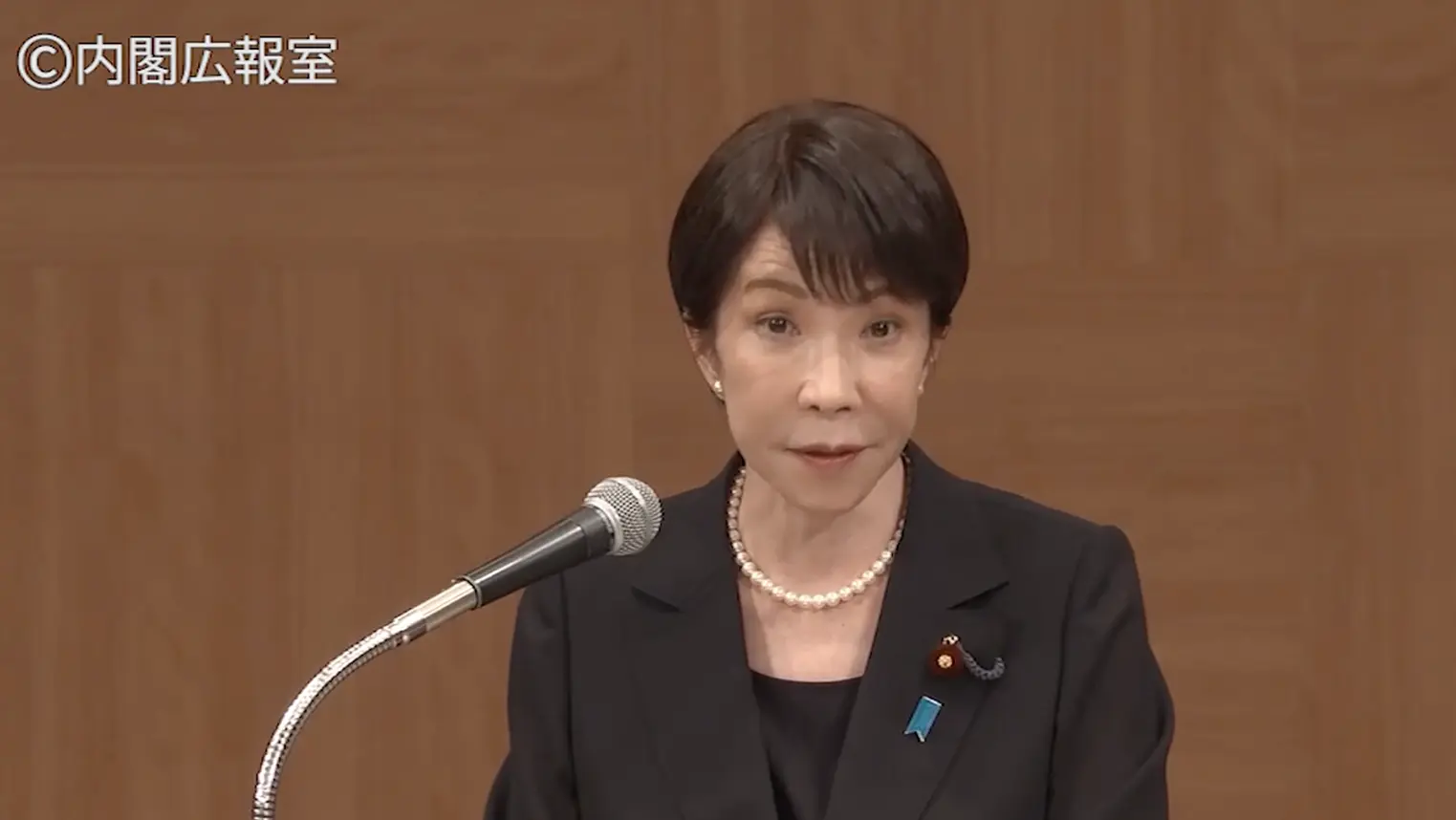
The most pointed exchange of the day came after the ceremony, when representatives of hibakusha organizations met with Takaichi at a Hiroshima City hotel to present their annual list of requests. They used the occasion to directly challenge her over reports of debate within the ruling Liberal Democratic Party over revising the Three Non-Nuclear Principles, and even discussion of nuclear sharing arrangements.
According to reports from Kyodo News, Jiji Press, and NHK, the groups told Takaichi that such discussion “runs counter to our wishes and cannot be allowed,” and that while Japan’s defense and security posture is being “accelerated,” there is little sign of “enthusiasm or concrete policy” for peace diplomacy or nuclear disarmament. Their written request called on the government to ratify the TPNW and to expand compensation and support to cover “all victims of the war,” including second-generation hibakusha (hibakusha nisei).
Takaichi’s response echoed her ceremony address and her later press conference: the government “upholds the Three Non-Nuclear Principles” and will “advance our efforts toward the goal of a world without nuclear weapons.” She told the group that, precisely because Japan is the only country to have suffered a wartime atomic bombing, it “understands the inhumanity of nuclear weapons better than any other nation.” NHK additionally reported that, citing the hibakusha’s advancing age, she committed to speeding up the review process for certifying atomic bomb-related diseases.