
Miyajima Kangen-sai
The Kangen-sai is the most elaborate festival held on the sacred island of Miyajima. Introduced by Heike warlord Taira-no-kiyomori in the 12th century, it is held on June 17 according to the lunar calendar, which can fall anywhere between late July and early August.
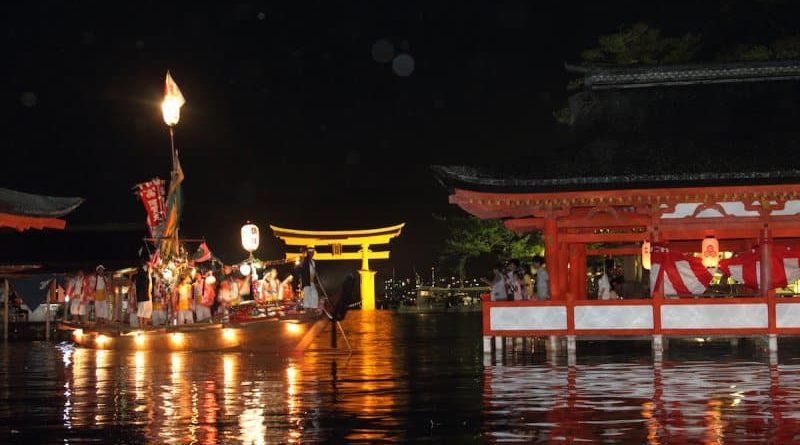
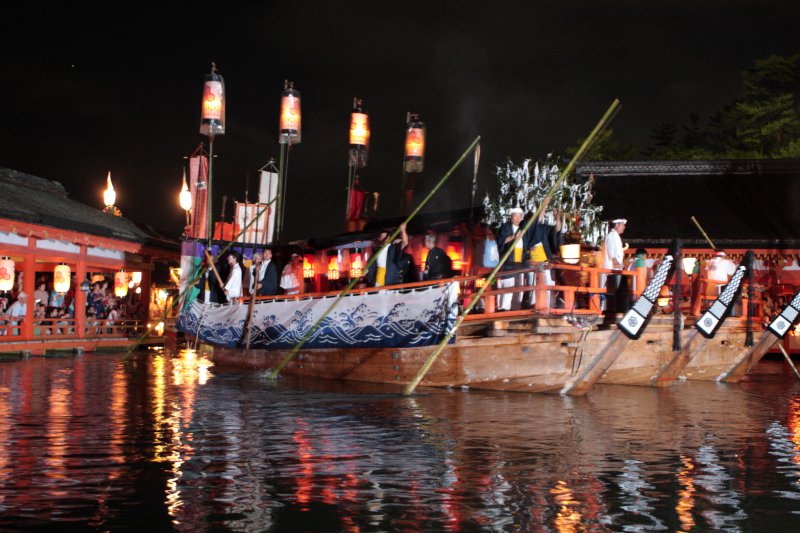
Kangen is classical court music played on nine instruments; three types of stringed instrument (wagon, biwa, koto), three types of drums (kakko, taiko, shoko), and three types of flutes (sho, hichiriki, ryuteki). Kangen-sai is a floating festival, and the musicians are towed on a beautifully decorated craft, between Itsukushima Shrine and other shrines on Miyajima and the mainland, by some very energetic oarsmen in smaller boats.
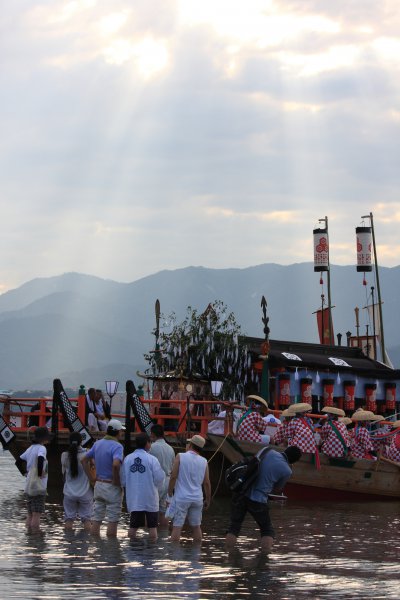
The ritual originated in the Heian capital, now Kyoto, as a form of entertainment for the nobility, who would enjoy the music played from boats on the river. Itsukushima’s great patron, Taira-no-kiyomori, brought the spectacle to Miyajima, where it was transformed from entertainment into a Shinto ritual. The ritual is over 1000 years old and dates from the time when setting foot on the entire island of Miyajima, which was deemed sacred, was prohibited. The female deities of Itsukushima Shrine were transported within a portable shrine to a large, specially constructed goza-bune boat. The boat, adorned with decorations and candle-lit lanterns, then sailed between the mainland and Miyajima on a night when the moon was close to full and the tide was high.
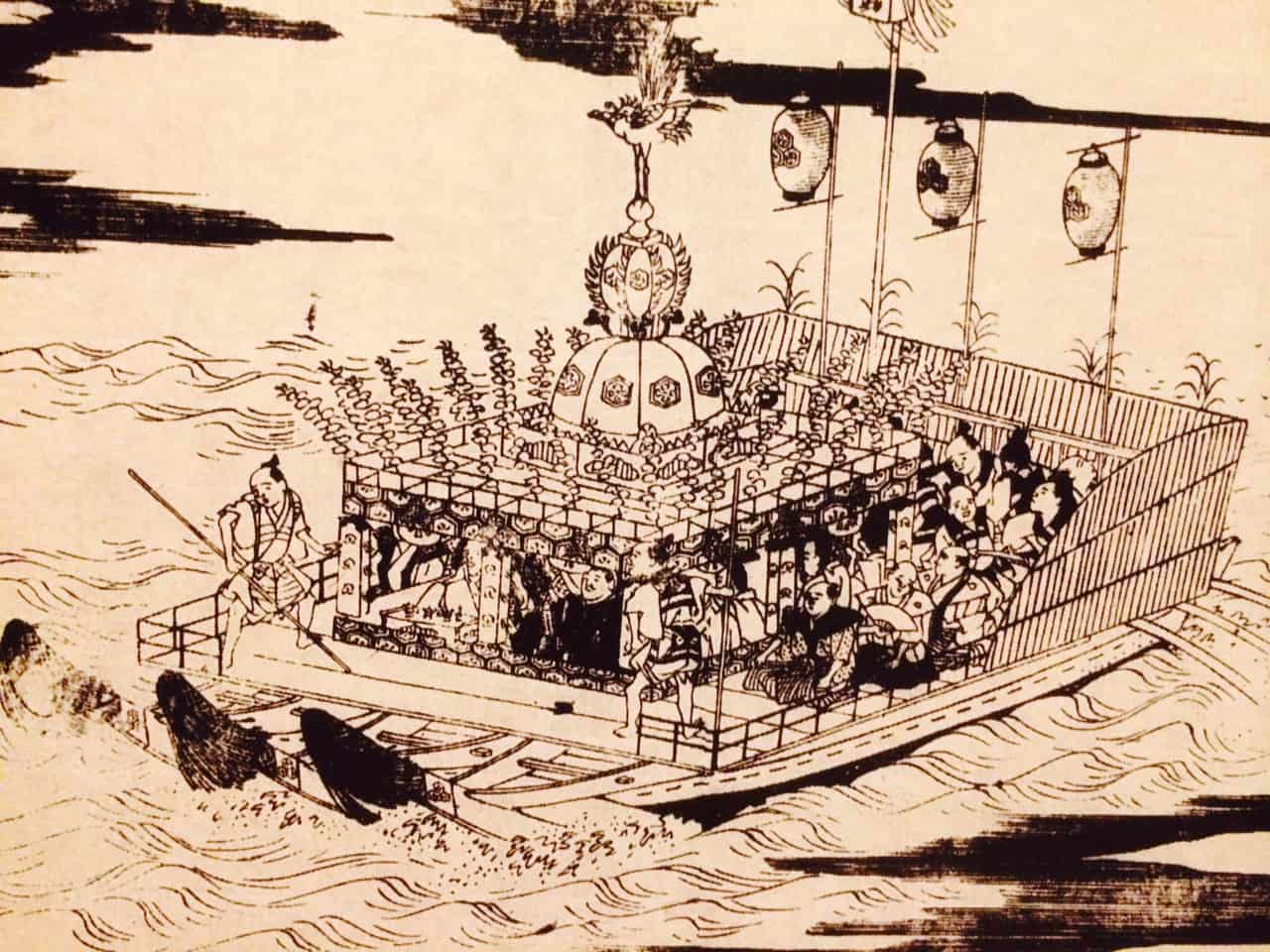
It is a long festival which begins with a shinto ceremony at Itsukushima Shrine at 4pm and continues until midnight.
After the rites performed in the shrine, festival participants make for a colorful and impressive sight as they parade through the great torii gate to board the boats, carrying a portable shrine in which the gods of Itsukushima are said to be carried to the goza-bune boat.
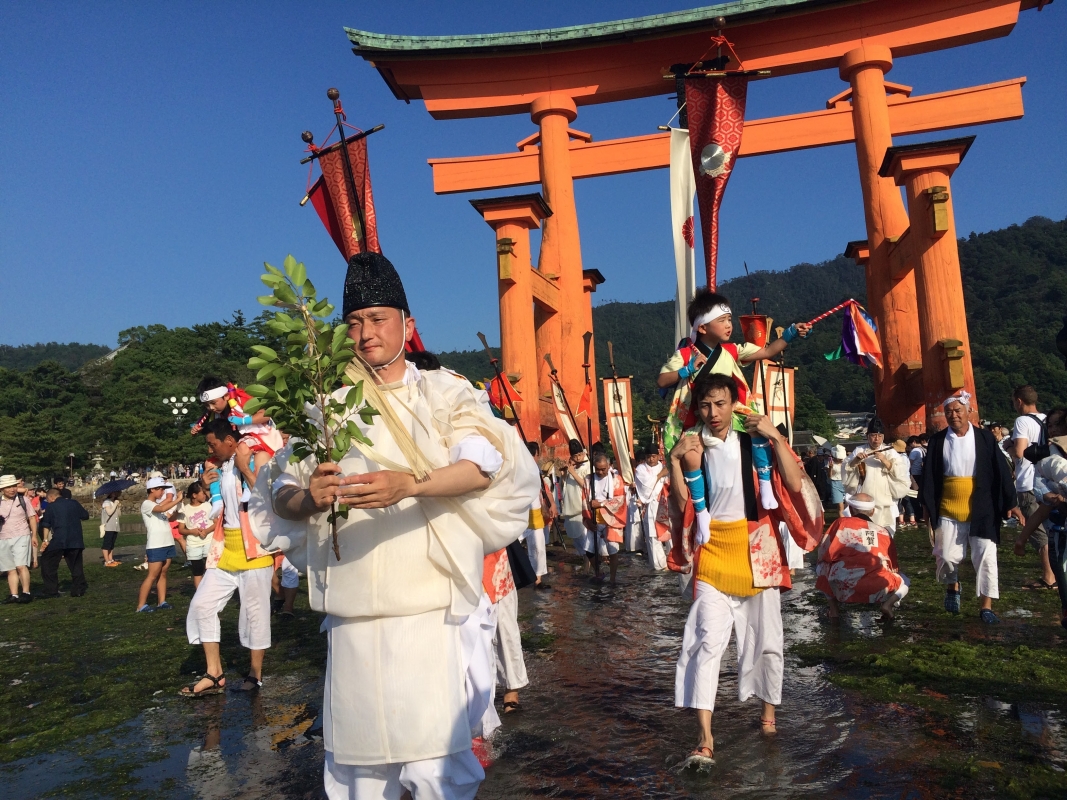
Today, the goza-bune boat is formed by 3 boats of traditional design being bound together. At around 5pm, the goza-bune is towed by three more boats, powered by oarsmen from the nearby ports of Eba and Aga (an honor bestowed on them for providing aid during a particularly stormy kangensai in 1701), and make make 3 circuits of the waters in front of Itsukushima Shrine while ceremonial music is played.

The boats then cross the water to the opposite shore where, after waiting for the sun to set and the lighting of the lanterns at Hotate-iwa Rock, they visit Jigozen Shrine, where 3 turns are again made and kangen music is played. Many people go to Jigozen Shrine to await the boats, get a shrine blessing and to enjoy the festive food stalls.
After leaving Jigozen, the boats once again cross the water, returning to Miyajima sometime after 9pm. Shinto priests and shrine maidens, backed by a crowd of people holding brightly-lit red lanterns, greet the boats at Nagahama Shrine – 3 more turns are made.
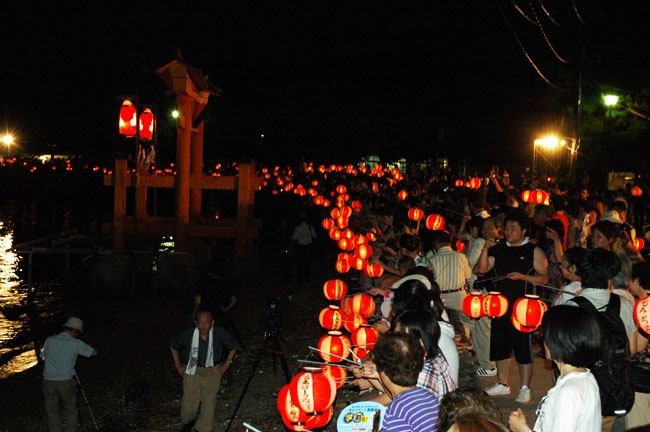
The fleet then moves along the coast to Omoto Shrine where music is performed. More music is performed in front of the hitasaki open stage at Itsukushima Shrine before the “grand finale” where the boats are rotated three times within the narrow confines of Itsukushima Shrine to the applause of onlookers. Finally, the portable shrine is return to with Itsukushima Shrine.
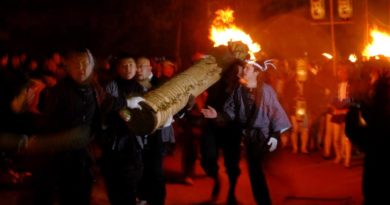
Anyone is welcome to join the lantern parade. Lanterns are handed out at Nagahama Shrine before 7:30 pm (until they are all gone) and after welcoming the boats, participants parade with the lanterns down the Omotesando shopping street to Itsukushima Shrine, where they receive a blessing and await the return of the boats from Omoto Shrine.
Extra ferry services to and from Miyajima are scheduled, with return ferries running approximately every 30min between 9pm and midnight (please confirm exact times).

Ritual schedule*
- 15:00 Hatsurensai [発輦祭]
- 16:00 Departure from Itsukushima Shrine [御本社出発]
- 16:40 Ootori Great Tori Gate [大鳥居前の儀]
- 18:30 Hotate-iwa Rock [火建岩]
- 19:20 Jigozen Shrine arrival [地御前神社]
- 19:50 Jigozen Shrine departure [地御前神社]
- 20:40 Nagahama Shrine [長浜神社]
- 21:30 Oomoto Shrine [大元神社]
- 22:10 Return to Itsukushima Shrine through the great torii gate to the Hitasaki platform
- 22:30 The boats are spun around three times in the small pace in front of Marouto Shrine inside Itsukushima Shrine [客神社前]
- 23:00 Portable shrine returned to the main hall of Itsukushima Shrine
* The schedule can vary considerable according to the weather and tidal conditions.
This video, although narrated in Japanese, gives a good idea of the way the festival progresses.
Getting back from the 2025 Kangensai Festival
Last Matsudai Ferry Departures (Miyajima to Miyajima-guchi)
21:00, 21:30, 22:00, 22:30, 23:00, 23:30, 24:00
(JR pass not valid)
Last Train Departures
Miyajima-guchi towards Hiroshima: 23:27
Miyajima-guchi towards Iwakuni: 24:31
Last Hiroden Streetcar Departure: 21:55 to Hiroshima, 22:30 to Nishi Hiroshima
[galleryview id=”247″]