Walking Through History: Ten Sites That Tell Hiroshima’s Story From Tragedy to Peace
80 years after the atomic bombing, Hiroshima stands as both a living city and a reminder to the world of the threat that nuclear weapons present. Now, as a place where history and hope coexist, the city aims to transform Dark Tourism into Peace Tourism.
From the skeletal remains of the A-bomb Dome to the vibrant Orizuru Tower, from the quiet voices preserved in school museums to the bustling streets of the rebuilt city, each site on our suggested itinerary below reveals a different facet of. This guide introduces ten essential locations — each revealing a different facet of Hiroshima’s story of loss, resilience, and a profound commitment to a world without nuclear weapons — that help us not only remember the tragedy but also understand the strength of those who rebuilt.
Hiroshima A-bomb Dome

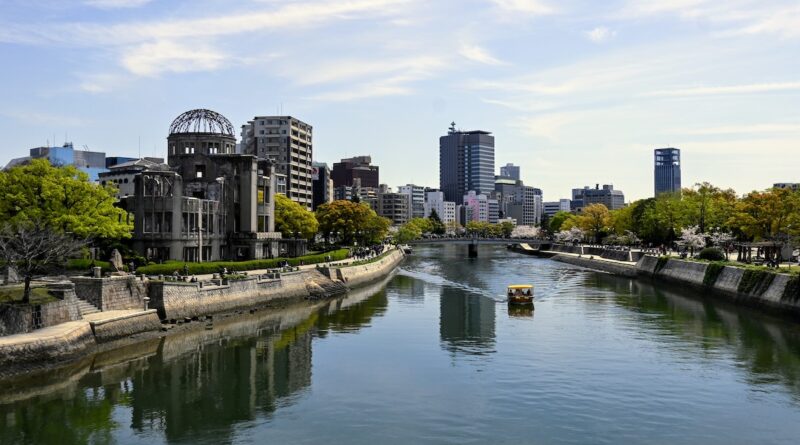
Often the very first stop for visitors to Hiroshima, the A-bomb Dome (originally the Hiroshima Prefectural Industrial Promotion Hall) stands as one of the few structures near the hypocentre that was left partially standing.
Why it’s important: It is symbolically powerful — recognised by UNESCO as a World Heritage Site in 1996 — and serves as a visual and emotional reminder of the destructive power of nuclear weapons.
What to look out for: The skeletal remains of the building, the nearby river setting, and the contrast of this wartime ruin set within a city that has been rebuilt.
Tip: Visit early in the morning or at dusk when the light on the building helps reflect its mood of remembrance.
Children’s Peace Monument

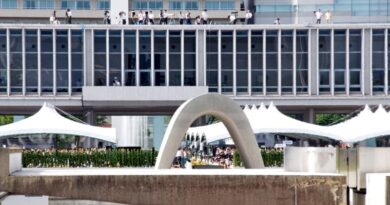
Within the Hiroshima Peace Memorial Park lies the Children’s Peace Monument — erected in memory of the many children who died as a result of the bombing. Classmates of Sadako Sasaki, subject of the famous story of Sadako and the Thousand Paper Cranes, who died of leukemia 10 years after she was exposed to the A-bomb at the age of two, raised money from around Japan and beyond to build the monument, which was opened in 1958.
Why it’s important: It gives the tragedy a human face, especially its impact on the youngest victims.
What to look out for: Thousands of origami paper cranes offered by visitors and schools from around the world, the statue of a girl holding a crane aloft, and the quiet space for reflection.
Tip: Ring the origami crane-shaped bell hanging inside the statue and make your wish for peace, or just reflect during a moment of silence. This complements a visit to the Cenotaph to the A-bomb Victims in the center of the Peace Memorial Park.
Hiroshima Peace Memorial Museum

The Peace Museum is perhaps the most concentrated site for learning about the bombing in detail — what happened on August 6, the immediate aftermath, the long-term sufferings of survivors (hibakusha), the city’s post-war reconstruction, and its efforts to promote the abolition of nuclear weapons.
Why it’s important: It lets visitors move from symbolic memorials to concrete facts, stories, and real artefacts — an essential part of understanding the event and its implications.
What to look out for: The “peace clock” (showing days since the bombing and days since the last nuclear test) in the lobby. Also, victims’ personal effects, photos of devastation, and survivor testimonies.
Tip: Set aside at least 1.5–2 hours. Some exhibits are emotionally heavy, so it’s recommended to take advantage of the special early and late reservation slots, which allow you to move at your own pace.
Hiroshima Rest House

A former kimono shop located very close to the hypocentre, the Rest House was one of the buildings that suffered direct blast damage. The reconstructed building now houses a tourist information center, café, and exhibition space.
Why it’s important: It connects daily life (a “rest house” / café) with the immediacy of destruction — showing how ordinary buildings and lives were transformed in an instant.
What to look out for: The basement area (which served as a shelter), the signage detailing the blast’s effects, and the remarkable story of Eizo Nomura, one of the handful of people who survived close the the bomb’s hypocenter.
Tip: There is a pleasant cafe on the upper floor of the Rest House, which makes it a good place to take a break and reflect on what can be a highly emotional day.
Hiroshima Ground Zero (Hypocenter)

Located almost exactly below the spot where the A-bomb was detonated, 600m in the air above a hospital, run to this day by descendants of the doctor who escaped the bombing by a stroke of fate. Visiting the Hiroshima Hypocenter marker helps ground the abstract idea of “distance from blast” referred to in so much of official discourse on the bombing.
Why it’s important: Being physically near ground zero adds immense impact — it helps one imagine how the blast wave, heat, and radiation spread out from this point.
What to look out for: Be sure to seek out the “A-bomed Jizo” statue nearby, which somehow survived the blast, and display an example of an “A-bomb shadow.”
Tip: Pause here for a moment of reflection. Consider how the view around you now was utterly transformed on that day.
Honkawa & Fukuromachi Elementary School Peace Museums

These two museums are former elementary school buildings that were extremely close to the blast: Honkawa and Fukuromachi. They now preserve parts of the original structures and exhibit the stories of the children and teachers who suffered.

Why they’re important: These exhibitions personalise the event further — rather than large monuments, these are places of education and youth, of survivors, of victims, and of the impact of war on children.
What to look out for: Remnants of blast damage (e.g., walls, basements), messages written by survivors (hibaku dengon) in Fukuromachi.
Tip: These sites are especially poignant for visitors travelling with children or students, as they help open discussion about war, peace, children’s rights, and memory.
Former Hiroshima Branch of the Bank of Japan Building

This building, located just 380m from the hypocenter, was one of the few reinforced concrete structures, allowing it to survive the blast. Now serving partly as a gallery space, the former Bank of Japan building is a time capsule from the time of the bombing
Why it’s important: This building illustrates how built-environment and structural features influenced survival and damage, giving insight into the mechanics of the explosion. Its structural integrity serves to highlight the lives of all 20 people inside who lost their lives.
What to look out for: The basement safe area, structural integrity features, and exhibition space documenting the building’s survival.
Tip: If you’re interested in architecture or how physical structures react to extreme events, this stop provides a bridge from human tragedy to technical/engineering reflection.
Hiroshima Orizuru Tower

Located adjacent to the Peace Park, Orizuru Tower offers panoramic views of the city, including the A-bomb Dome, and features an “Orizuru Wall” filled with paper cranes folded by thousands of visitors
.
Why it’s important: It gives a vantage point — showing how the city has been rebuilt around historical sites — and invites personalized engagement (via the origami cranes) with the theme of peace.
What to look out for: The rooftop observation deck, designed by one of Hiroshima’s most renowned architects, has a view over the Peace Park and the city, and the origami crane experience, where you can fold your own and add it to the wall.
Tip: Best visited later in the day for golden-hour views, or winter when the light is softer. It’s also a good way to transition from remembrance (in the park/museum) to looking ahead (at the cityscape).
Pride of Hiroshima Exhibition

“Pride of Hiroshima” is a space that focuses on the remarkable recovery of Hiroshima after the bombing and the role many local companies played in rebuilding the city into the vibrant urban center of today. Through a contemporary, bilingual display, the exhibition features modern perspectives on Hiroshima’s identity, peace advocacy, nuclear disarmament, and local pride.
Why it’s important: It shifts the focus from “what happened” to “what it means today” — how Hiroshima lives, how it remembers, and how it projects a message of peace and resilience.
What to look out for: The fascinating origin stories of businesses and companies that are now household names, both locally and some worldwide.
Tip: Use this as a reflective anchor before you leave transition back into the hustle and bustle of the city — think about the future, not just the past.
Wood Egg Okonomiyaki Hall

Not a survivor site of the bombing, the Wood Egg Okonomiyaki Hall is an excellent place to engage with contemporary Hiroshima through its food culture, and primarily its soul food, Okonomiyaki. Trying Okonomiyaki at one of the hundreds of little shops that sell it before you leave Hiroshima is a must, and it tastes all the more delicious when you learn how it is no exaggeration to say that it is the food that fueled the recovery.
Why it’s important: The evolution of Okonomiyaki —from its roots as a simple snack made with rations provided by the postwar occupation forces — mirrors the recovery of the city.
What to look out for: Check out the reconstructions of a postwar okonomiyaki shop and daigashi sweet stall, which elicit pangs of nostalgia from local visitors.
Tip: Combine your stop with an okonomiyaki-making workshop at which you make Hiroshima’s favorite dish alongside locals of all ages.