

Innovation Coast: After Almost 15 Years, What Does Fukushima’s Recovery Look Like?
In March 2026, it will be fifteen years after the initial 2011 earthquake, tsunami, and nuclear disaster destroyed much of the eastern coast of Fukushima. The story of Fukushima’s recovery is often told through the scale of national investment and policies, but just as central are the choices made by people who stayed, returned, or moved to the region to rebuild it.
Today, many in Fukushima use the disaster as a foundation for reimaging and rebuilding the region stronger and more resilient. As the frequency of severe natural disasters continues to increase, Fukushima’s experience also offers lessons for the global community.
Living with a Nuclear Legacy
On March 11, 2011, the Great East Japan Earthquake and Tsunami hit the Hamadori area of Fukushima. More than 20,000 people died, while another 27,600 or so people were displaced and scattered across Japan. The earthquake also damaged the Fukushima Daiichi Nuclear Power Plant, triggering radiation alerts and large-scale evacuations. Only two other cities in Japan – Hiroshima and Nagasaki –have experienced nuclear incidents, although under vastly different circumstances during World War Two. Like those cities, Fukushima is now undertaking rebuilding activities while carrying a nuclear legacy that shapes both its internal identity and how it is perceived from outside. The question has never been simply how to rebuild, but how to do so in a way that acknowledges history rather than burying it.
The Innovation Coast Framework
Most revitalization efforts in Fukushima occur under the Fukushima Innovation Coast Framework, a national government initiative launched in 2014 to revitalize the Hamadori area of Fukushima. The framework focuses on industry, research, and employment as levers for encouraging people to return and for attracting newcomers. In recent years, momentum has increased. New companies, stores, and people have begun to move back to the region and revitalize the economy.
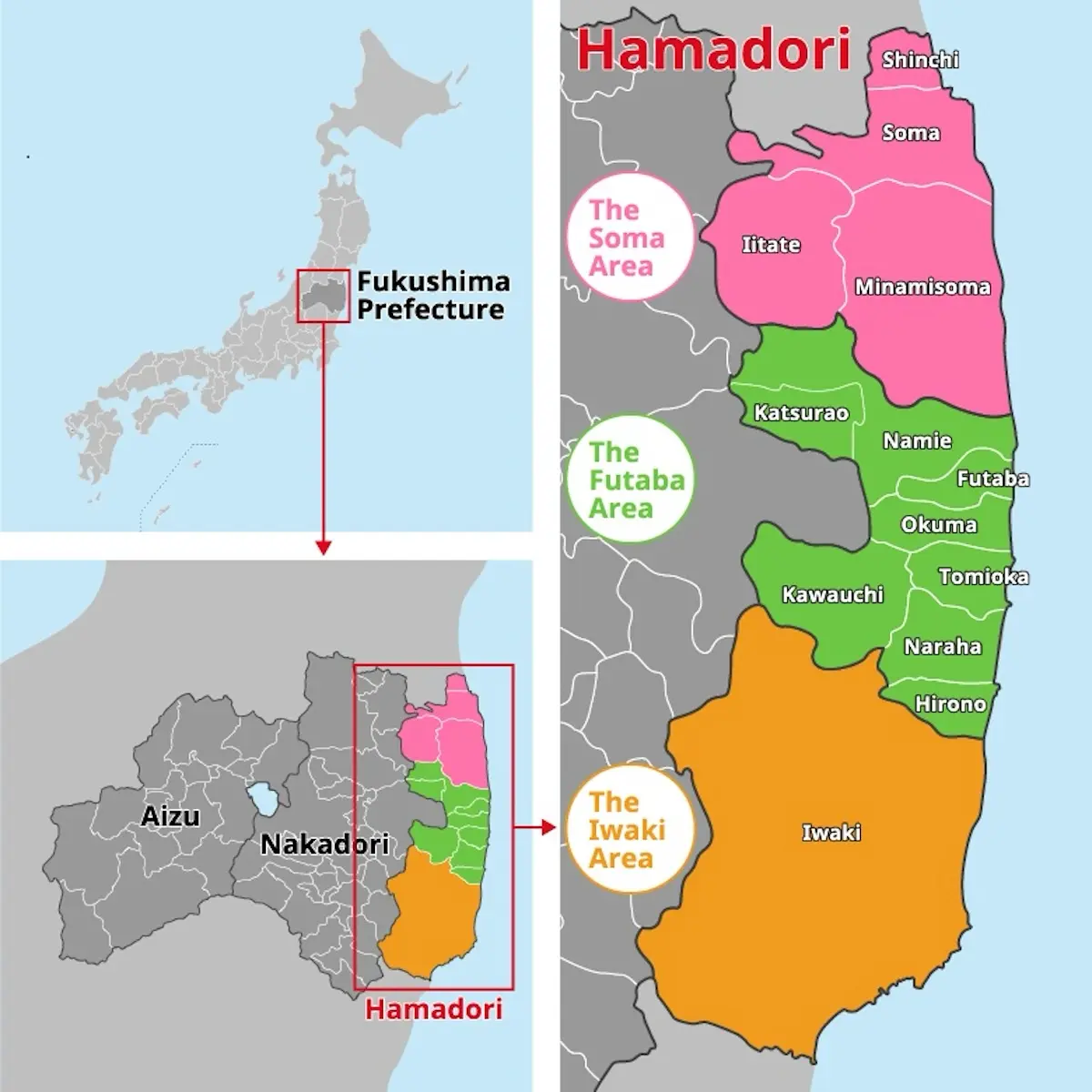
Map courtesy of https://en.hamadori-coast.com/
F-REI: Research as a Catalyst
In 2023, the Fukushima Institute for Research, Education and Innovation (F-REI) was established. With an annual budget of around 10-billion-yen, F-REI supports companies and projects in the fields of robotics, agriculture, energy production, and radiation science.
F-REI’s mission is explicitly forward-looking but rooted in Fukushima’s past. It uses the history of disaster not as a stigma but as a foundation for innovation, thus echoing Hiroshima’s own postwar transformation into a global center for peace studies and anti-nuclear research. In both cases, history was used as a foundation for redevelopment.
Start-Ups and New Industries
F-REI and other government initiatives have attracted a burgeoning group of startup companies as well as several established companies to relocate to eastern Fukushima. Their work spans sustainability, food production, mobility – all fields tied to addressing broader social challenges.
Rice Resin, founded in Fukushima, produces rice-based plastics from non-edible, surplus rice mixed with petroleum-based plastics. The company was founded in Fukushima to reframe the prefecture as a center for environmentally conscious research and manufacturing.
Innophys [ja] makes wearable muscle suits designed to reduce physical strain, particularly for workers who repeatedly bend and lift. The company moved its operations to Fukushima due to the business-friendly environment.
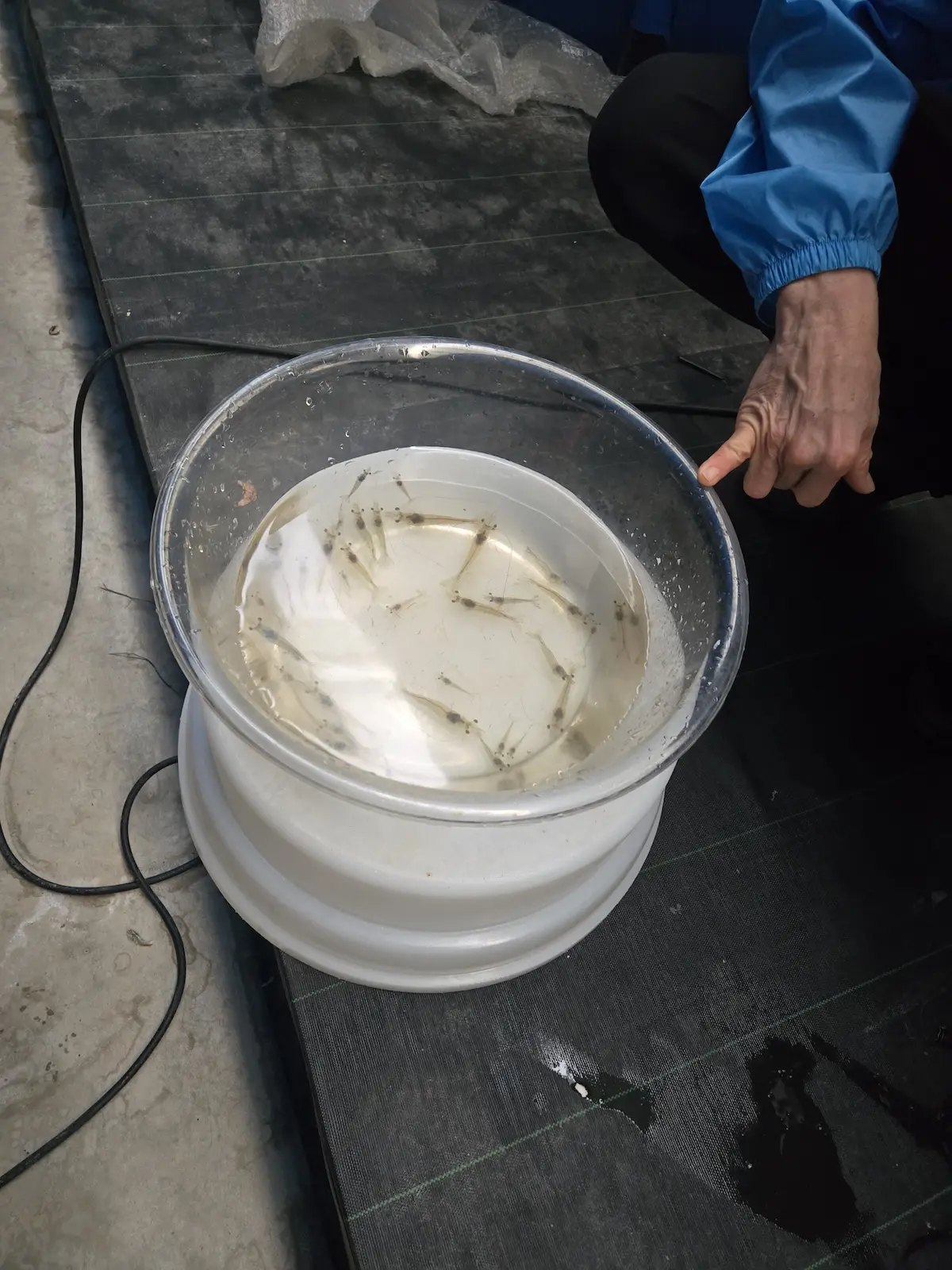
Nearby, Haneru Katsurau [ja], a land-based shrimp farm, is developing techniques to cultivate shrimp in colder regions while also creating local jobs in food production.
Another ambitious company is Zippar, a start-up focused on developing an autonomous, fully electric urban cable car system. Currently, the company hopes to start production sometime before 2030. Like other companies, Zippar moved its operations to Fukushima due to the business-friendly environment and availability of land.
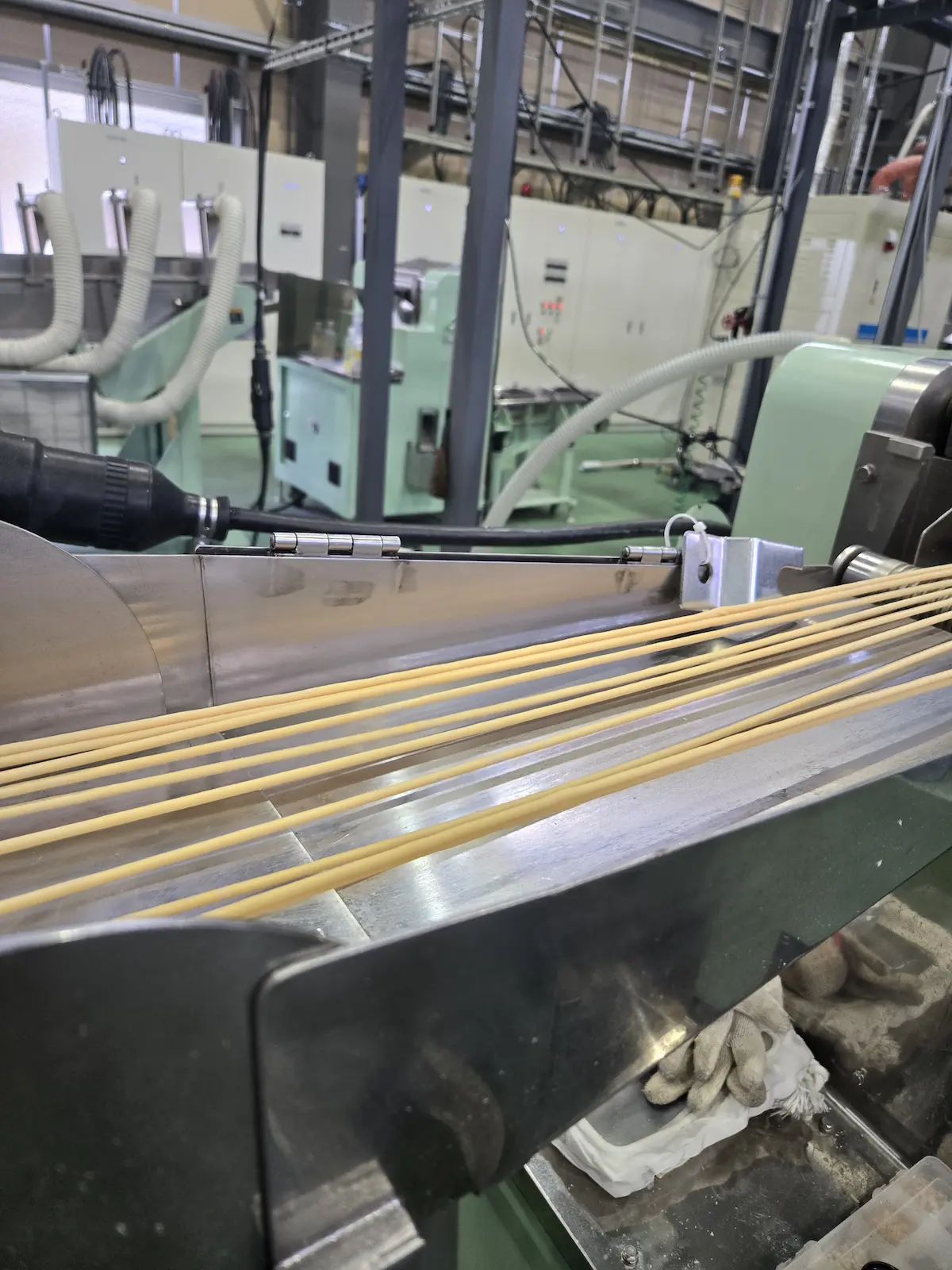

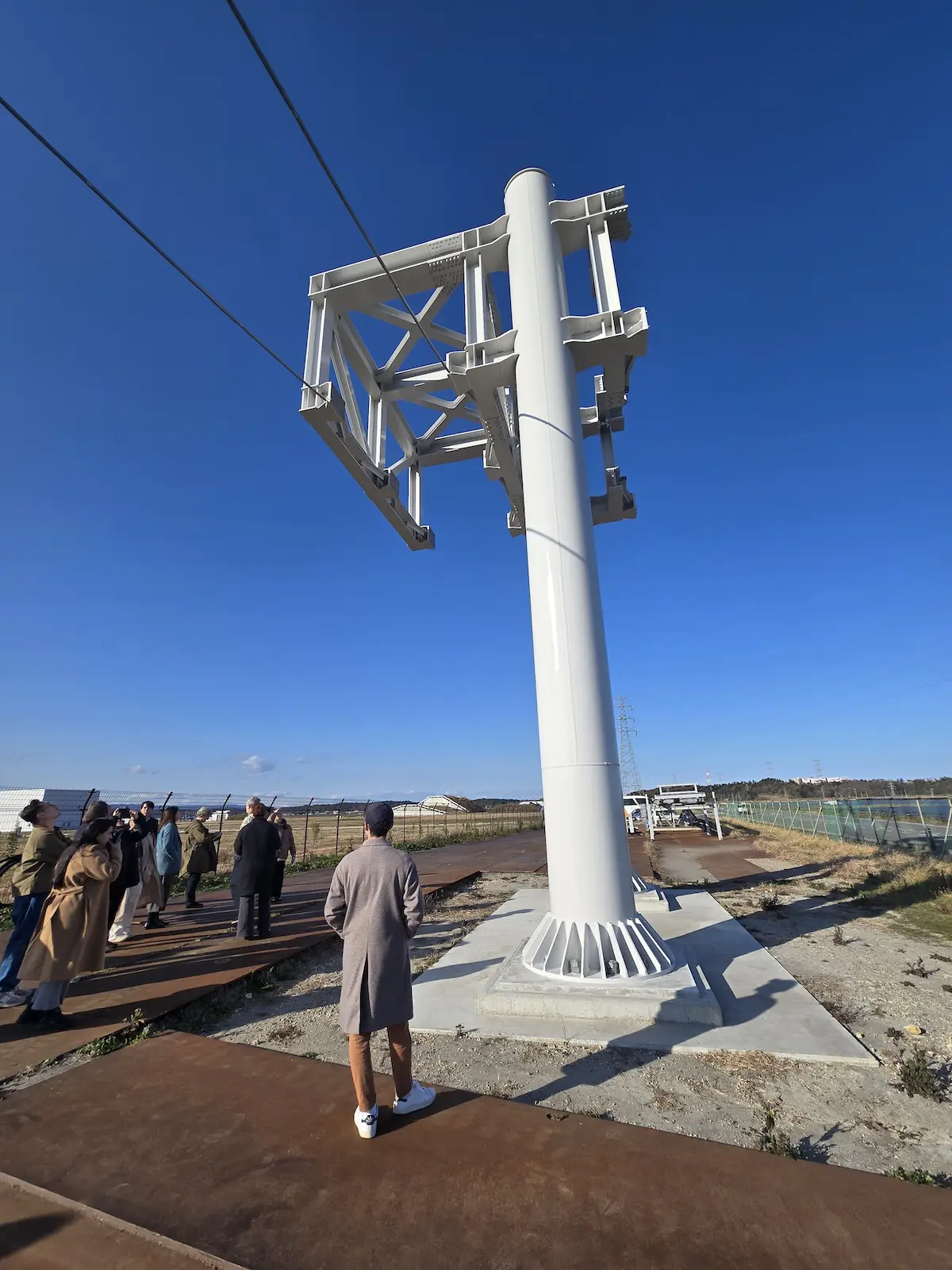
The cable for Zippar’s urban-cable car (Author’s photo).
Remaking Fukushima as a Clean Energy Leader
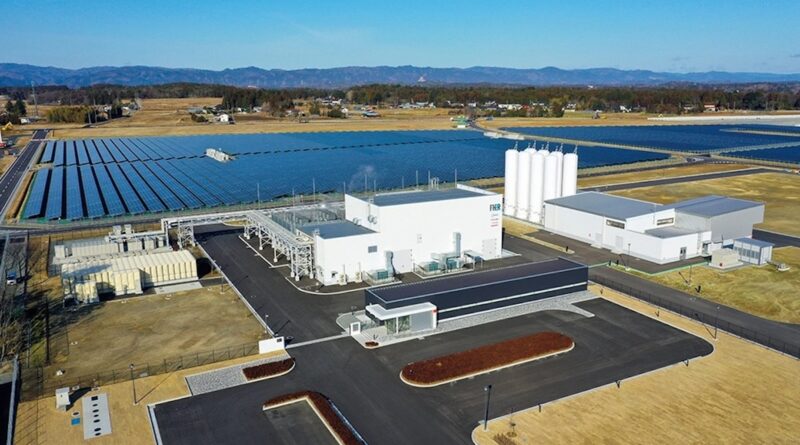
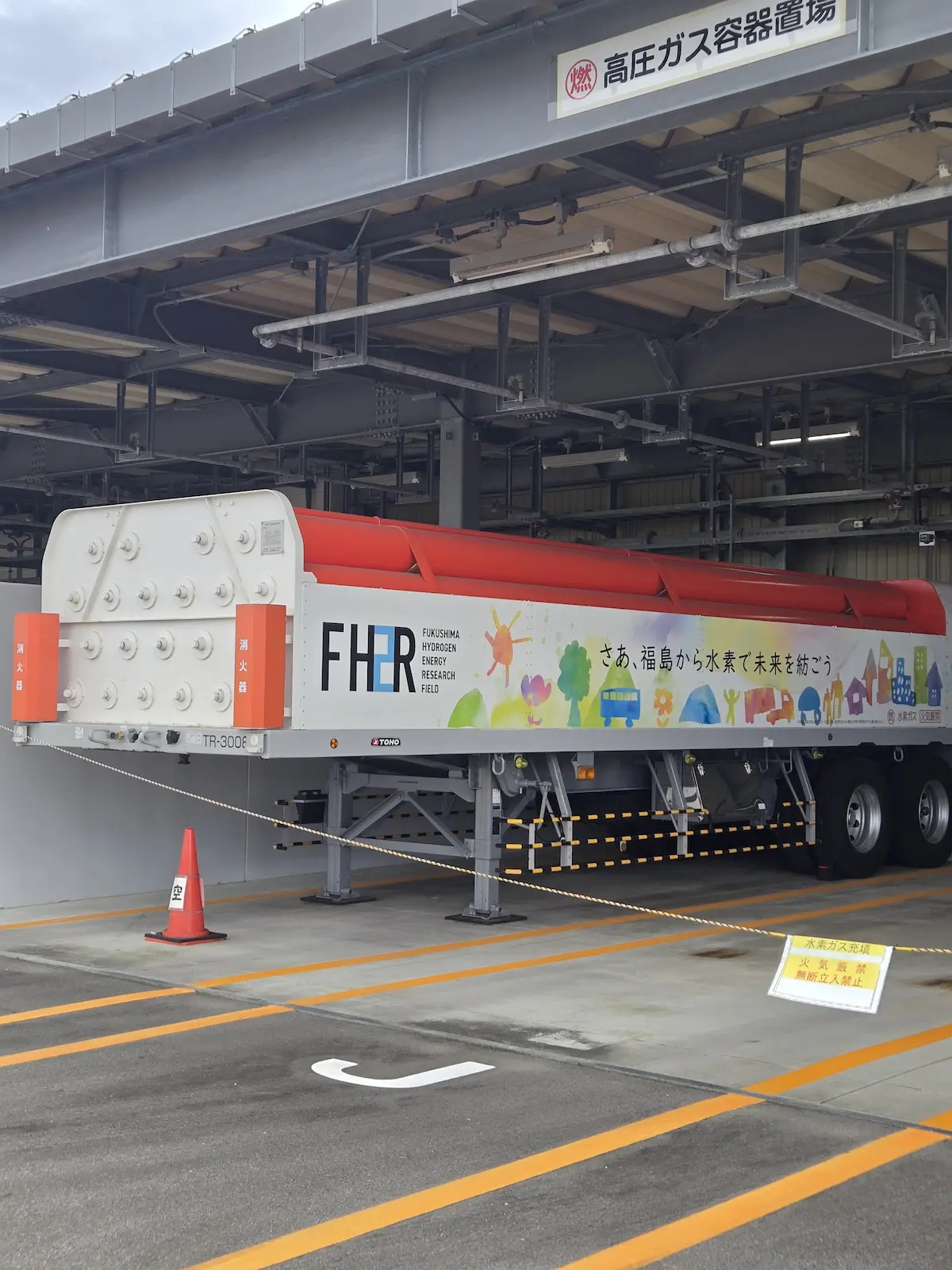
Drawing on its history with the nuclear disaster, Fukushima is also working to establish itself as a clean-energy leader. Along the coastline, large-scale solar installations are a common sight, adding an interesting juxtaposition to the rural scenery. The region is also home to one of the world’s largest hydrogen production facilities, the Fukushima Hydrogen Energy Research Field, which produces hydrogen using renewable energy for power generation and research.
This emphasis on clean energy comes from Fukushima’s nuclear experience. Rather than shifting away from energy production, the region is now positioning itself at the forefront of debates about sustainability, resilience, and risk.
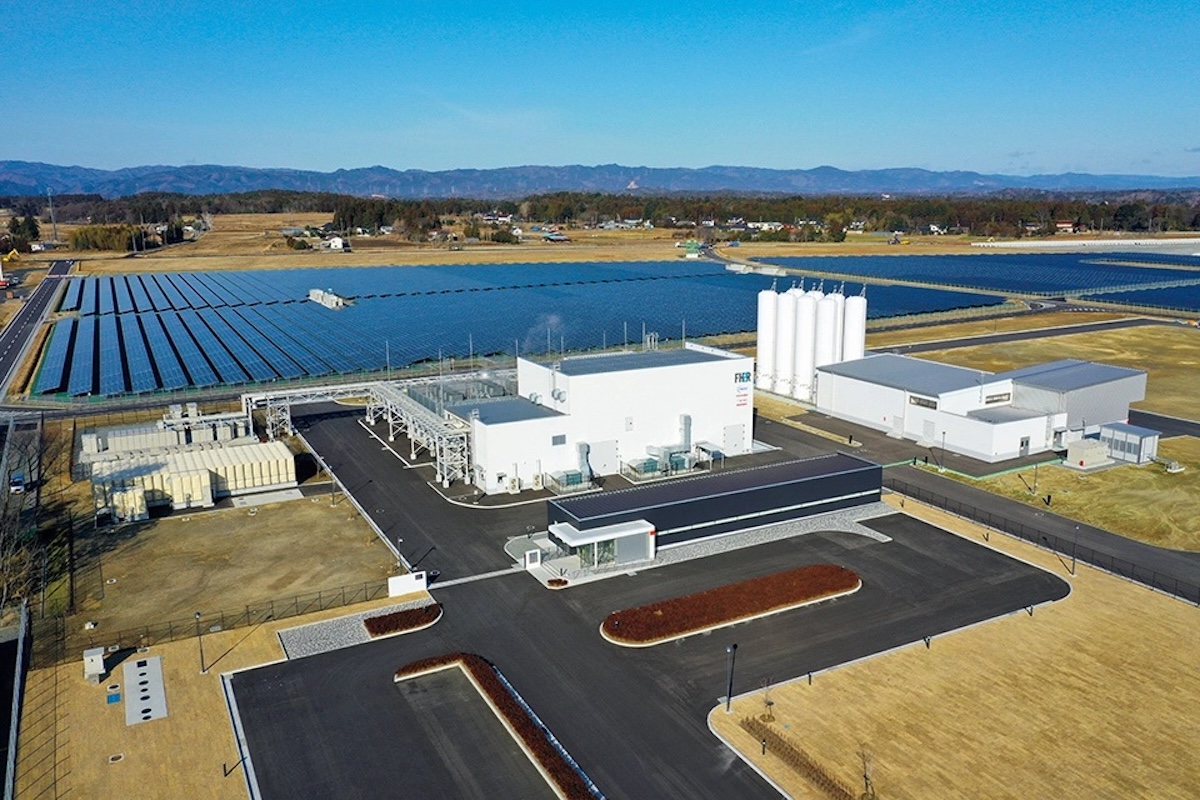
Image from https://www.japan.go.jp/kizuna/2021/03/hydrogen-production_facility.html

Hydrogen storage tanks at the Fukushima Hydrogen Energy Research Field (Author’s photo).
Recovery from the Ground Up
While government funding and policies have been critical to Fukushima’s recovery, local initiatives have proven equally transformative. One such example is Mr. Wada, a resident of the area. In the aftermath of the disaster, he recognized that recovery would be slow and uncertain, but also that waiting passively would only deepen the decline.
In 2014, before some areas were even officially declared safe for return, he launched a co-working space to support small businesses. He also supported the establishment of several glass-crafting businesses, creating opportunities for women in the area, and supported new sake breweries that gave people a place to socialize.
Hear more about Wada-san’s efforts to revitalize the region here [ja].
Please also check out the following local businesses in the region:
Odaka Workers’ Base
Odaka Workers’ Base [ja] is a co-working space focused on supporting businesses in Minamisoma City.
Haccoba
Haccoba is a craft sake brewery in Minamisoma that opened in 2021 with the goal of creating a community gathering place in Minamisoma. They also have a pub in the JR Odaka Station called Pubma [ja]
Pukupuku Brewery
Pukupuku Brewery [ja] is a unique local sake brewery in Minamisoma that opened in 2024.
Various studios, such as Kirako [ja] and Irize [ja], make glass jewelry.
Lessons Beyond Fukushima
Fukushima’s experience underscores a simple but often underappreciated truth: policy and funding can create conditions for recovery, but they cannot produce it on their own. That work belongs to people willing to invest their time, creativity, and belief in a place.
As Hiroshima transformed itself in the decades following its devastation, Fukushima is charting a similar course—one that does not deny its past, but uses it as a source of purpose. For regions around the world confronting increasingly frequent natural disasters, Fukushima offers a model of recovery that is neither quick nor easy, but deeply human.